
California Landlord-Tenant Law Summary: The Ultimate Rental Inspection Checklist

Updated: Jul 17
In California, a rental inspection isn't just a maintenance task. It's a vital legal defense strategy that starts with understanding habitability statutes. If you've felt overwhelmed by the constant stream of new regulations, you aren't alone. This california landlord-tenant law summary helps address the anxiety many property owners feel regarding strict 2026 compliance updates, like the new requirement to provide working stoves and refrigerators under Assembly Bill 628. It's a lot to manage, but staying proactive is the only way to protect your hard-earned investment.
We'll show you how to implement a legally sound inspection process that lowers your risk of tenant litigation and keeps your property value high. From mastering the new one-month security deposit limit to understanding the 2026 electronic statement options under Assembly Bill 414, this article previews the essential steps for a worry-free rental experience. We've broken down the latest mandates into a comprehensive checklist so you can stop reacting to changes and start leading with a steady hand. By the end of this guide, you'll have a clear roadmap to navigate everything from natural disaster hazards to the 21-day deposit return window with total confidence.
Table of Contents
The Legal Foundation: Why California Landlords Need an Inspection Checklist
Owning rental property in California often feels like managing a moving target. With regulations tightening every year, a handshake agreement or a quick visual walkthrough simply won't cut it anymore. If you want to protect your investment, you need a strategy rooted in a clear california landlord-tenant law summary. This starts with understanding that your primary duty isn't just collecting rent; it's maintaining a "tenantable" environment as defined by state statutes. A checklist isn't just a to-do list. It's a legal shield that proves you've met your obligations from day one.
Understanding the Implied Warranty of Habitability
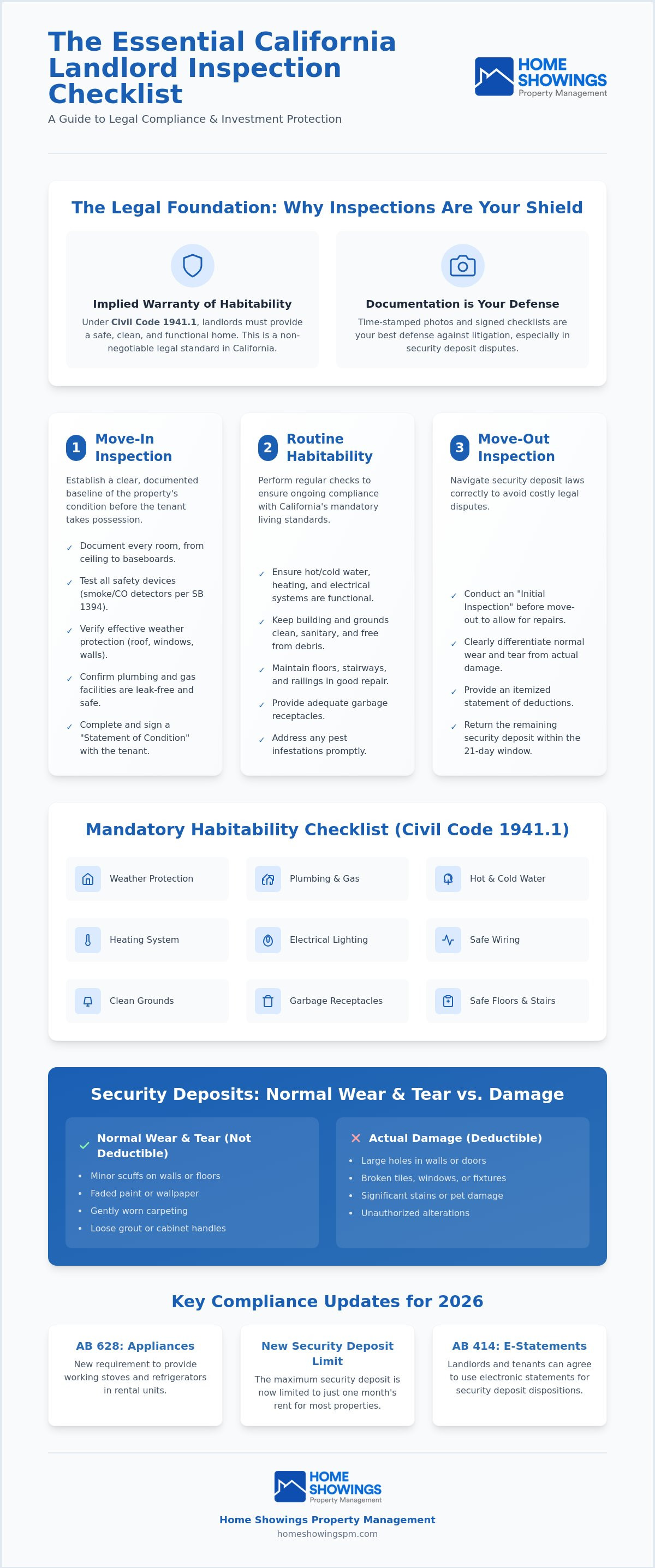
Under California Civil Code 1941.1, the Implied Warranty of Habitability is a non-negotiable standard. It means you're legally obligated to provide a safe, clean, and functional home, regardless of what the lease says. For a property to be considered habitable, several essential systems must be in good working order. These include effective weather protection for roofs and walls, plumbing and gas facilities, hot and cold running water, a functional heating system, and electrical lighting with safe wiring. In Sacramento County, failing a habitability inspection doesn't just lead to unhappy tenants. It can result in court-ordered rent reductions, repair-and-deduct actions, or heavy fines from local code enforcement. If a major system fails and isn't addressed, you lose the legal right to collect rent until the issue is resolved.
Documentation: The Landlord’s Best Defense
Documentation is your best defense against the rising tide of tenant litigation. While many DIY landlords rely on memory, Landlord-tenant law requires specific evidence to justify security deposit withholdings. If you don't have a signed move-in checklist to compare against a move-out report, a judge is likely to rule in the tenant's favor during a dispute. This is why we prioritize time-stamped photos and digital records within our secure Owner Portals. It creates an undeniable paper trail that links directly to the latest California landlord tenant laws 2024 updates, ensuring you're compliant with the most recent shifts in the law.
As we approach 2026, the legal landscape is shifting again. With new mandates regarding appliances and electronic statements, "self-inspections" are becoming a liability for owners who aren't trained to spot minor code violations. Using a comprehensive california landlord-tenant law summary as part of your annual risk management plan ensures you aren't caught off guard. When you move beyond basic paper forms and embrace professional-grade reporting, you replace the fear of "what-if" with the confidence of knowing every detail is managed.
The Move-In Checklist: Setting the Baseline for Compliance
The first day of a new lease is more than just a key exchange; it's your primary opportunity to document the property's condition before a tenant takes possession. This step is a cornerstone of any california landlord-tenant law summary because it establishes the baseline for all future inspections. If you don't have a clear record of the unit's state at move-in, you'll find it nearly impossible to justify security deposit deductions later. We recommend a methodical walkthrough that covers every corner of the home, from the ceiling to the baseboards.
Functional testing of safety devices is non-negotiable. Under SB 1394, California landlords must ensure smoke and carbon monoxide detectors are present and operational in every bedroom and on every level of the home. Don't just look at them; press the test button and document the result in your report. This meticulousness extends to "effective weather protection." You must verify that the roof, exterior walls, and windows are sound and free of leaks. In areas like Elk Grove, local building codes also dictate specific standards for plumbing and gas facilities. Confirming these systems are leak-free and vented correctly is essential for both safety and legal compliance.
To make this record official, use a "Statement of Condition" form. This document should detail the state of every room and feature. Once completed, get the tenant's signature. This signature acts as a mutual agreement on the property's condition, providing you with a high level of legal protection if disputes arise. For a broader look at your responsibilities, reviewing an Overview of Landlord-Tenant Laws in California can help you see how these move-in requirements fit into the larger regulatory picture. If you're feeling overwhelmed by these technical requirements, our team can handle the heavy lifting through our professional property inspections services.
Safety and Security Standards
Security is a top priority for both you and your residents. Check that all exterior doors have working deadbolts and that every window has a functioning locking mechanism. In multi-unit Sacramento properties, you must also test emergency egress routes to ensure they are unobstructed and easy to navigate. Don't forget the exterior; verifying adequate lighting for common areas and walkways helps prevent accidents and discourages unauthorized activity. A quick check of these items during move-in prevents habitability claims later.
Required Disclosures During Inspection
A compliant move-in process includes several mandatory disclosures that should be part of your california landlord-tenant law summary. Under AB 551, you must provide a specific bed bug notice to all new tenants. You're also required to provide information regarding lead-based paint for pre-1978 homes and potential mold issues. It's helpful to cross-reference these requirements with California tenant screening laws to ensure you've properly vetted the individuals entering your home and provided all necessary paperwork from day one.
The Habitability Checklist: Mandatory Items for Every California Rental
While the move-in process sets the baseline, maintaining the habitability of your property is an ongoing legal requirement. This portion of our california landlord-tenant law summary focuses on the structural health and essential services that keep a unit legally "tenantable." If a property falls below these standards, a tenant may have the right to withhold rent or repair the issue themselves and deduct the cost from their payment. Staying ahead of these needs through regular property maintenance ensures your investment remains profitable and protected from liability.
The exterior of the building is your first line of defense. You must verify that waterproofing and weather protection for the roof and exterior walls are fully intact. Broken windows or cracked siding aren't just cosmetic issues; they are habitability failures. Likewise, all plumbing, gas, and sewage systems must be in good working order. We recommend testing for gas leaks and checking sewage lines for potential backups at least once a year. In areas like Roseville, local ordinances are specific about heating facilities. You're required to maintain heating equipment that can keep the unit at a comfortable temperature, regardless of the weather outside. Finally, ensure all electrical lighting and wiring are maintained in a safe, functional condition to prevent fire hazards and ensure tenant safety.
Kitchen and Bathroom Compliance
Kitchens and bathrooms are high-traffic areas and frequent sources of litigation in California. Proper ventilation is critical here to prevent mold growth, which is a significant concern under state health and safety codes. Ensure that exhaust fans are functional and that windows can be opened for airflow. You should also verify that the hot water heater is set correctly; water must reach at least 120 degrees Fahrenheit to meet safety standards. Check that all drains are clear and that toilets are properly secured to the floor to prevent leaks and structural damage over time.
Structural and Exterior Integrity
Safety extends to the "bones" of the property and its surrounding environment. Inspect all stairs, hallways, and floors for trip hazards or loose boards that could lead to accidents. Under California Civil Code 1941.1, you're also responsible for keeping the property free from pest infestations. This means checking for signs of rodents or insects during every inspection and taking proactive measures if issues are found. Finally, verify that adequate trash receptacles are available and that the property meets local sanitation standards. A clean, well-maintained exterior doesn't just attract better tenants; it demonstrates your commitment to a high standard of care.
To further enhance the tenant experience and promote a tidy environment, consider recommending or providing small organizational tools. You can discover Taschenretter for stylish solutions that help protect personal belongings while maintaining a clutter-free home.
The Move-Out Inspection: Navigating Security Deposit Laws
The move-out process is often where the relationship between a landlord and tenant faces its toughest test. It's the phase where theoretical rules meet financial reality, making a clear california landlord-tenant law summary your most valuable asset. If you don't follow the specific procedural steps required by state law, you risk losing your right to withhold any portion of the security deposit, even if the damage is obvious. Precision during this transition protects your cash flow and prevents the headaches of small claims court.
Under Civil Code 1950.5, you're required to notify your tenant in writing of their right to an "initial inspection" before they vacate. This isn't just a courtesy; it's a legal mandate. This walkthrough allows both parties to identify issues that might lead to deductions. If a tenant requests this inspection, it must take place during the last two weeks of the tenancy. Following this, you must provide an itemized list of proposed repairs. This transparency builds trust and gives the tenant a fair chance to return the property to its original condition, minus normal wear and tear.
The Pre-Move-Out Walkthrough
Timing is everything when scheduling the initial inspection. You must provide at least a 48-hour written notice of the date and time, unless the tenant waives this right in writing. During the walkthrough, your goal is to be meticulous but fair. If you find stained carpets or broken fixtures, add them to your itemized list immediately. This allows the tenant to remedy the issues themselves before the final move-out. By being proactive, you often avoid the need for deductions entirely, which is always the smoothest outcome for everyone involved.
Final Assessment and Itemization
Once the keys are returned, you perform the final assessment. This is where you distinguish between "normal wear and tear," like faded paint or worn carpet fibers, and actual damage, such as large holes in the wall or broken appliances. We recommend documenting every finding with high-resolution, time-stamped photos. When calculating repair costs, use actual market rates for contractors in Folsom or Rancho Cordova to ensure your deductions are defensible. For many owners, linking this process to a professional rental property inspection sacramento ensures that no detail is missed and every legal requirement is met.
Remember that you have exactly 21 calendar days from the date the tenant vacates to return the deposit. This must include an itemized statement and copies of receipts for any repairs exceeding 125 dollars. As of 2026, Assembly Bill 414 allows you and the tenant to agree to send these statements and refunds electronically, which can significantly speed up the process. If you want to ensure your move-out process is handled with professional precision, our property inspections team is ready to manage the entire workflow for you.
How Home Showings Property Management Ensures Compliance
If managing the fine details of state regulations feels like a full-time job, that's because it is. Between tracking new habitability standards and meeting strict move-out deadlines, the margin for error is slim. We provide a steady hand to guide you through this process, moving far beyond a basic paper checklist. Our professional california landlord-tenant law summary is integrated into every step of our workflow, ensuring your property remains a protected, high-performing asset. By combining local expertise with modern efficiency, we replace the stress of ownership with the confidence of knowing every detail is managed.
Our process relies on professional-grade property inspections that document every inch of your rental. We don't just look for obvious damage; we verify that every system meets current safety codes. This data is delivered to you through tech-savvy reporting in our secure Owner Portals. If an issue is identified, we don't just report it; we solve it. We coordinate property maintenance using a network of vetted local vendors throughout Elk Grove and Sacramento. This proactive protection preserves your asset's long-term value and ensures that minor repairs don't escalate into expensive legal disputes.
Our Systematic Approach to California Law
Legislation moves fast, but we stay several steps ahead. We track every shift in california landlord-tenant law summary requirements, from security deposit limits to the upcoming 2026 appliance mandates, so you don't have to. When a legal dispute arises, having third-party documentation from a professional manager is your strongest defense. We also reduce vacancy rates through meticulous move-in and move-out coordination. By handling the inspections and documentation with clinical precision, we ensure a smooth transition for every resident while keeping your interests front and center.
Local Expertise in the Sacramento Region
The Central Valley climate presents unique challenges that out-of-area managers often miss. From the intense heat in Roseville that taxes HVAC systems to the specific ventilation needs in Folsom rentals, our "boots-on-the-ground" philosophy ensures nothing is overlooked. We understand the local landscape because we live and work here. We don't just manage properties; we build partnerships based on transparency and calm reliability. If you're ready to step away from the daily grind of compliance and maintenance, we are here to help. Protect your investment with Home Showings Property Management and experience the peace of mind that comes with professional oversight.
Protect Your Investment Through Proactive Oversight
Mastering the complexities of rental regulations doesn't have to be a source of constant stress. By implementing a methodical inspection checklist, you create a transparent record that protects your property and your reputation. This california landlord-tenant law summary has highlighted how documented move-in conditions and timely move-out walkthroughs serve as your strongest legal shield. Whether you're navigating the nuances of Civil Code 1941.1 or ensuring your security deposit itemizations meet the mandatory 21-day deadline, staying organized is the key to long-term stability.
If you're ready to move beyond manual paperwork, our team is here to help. We provide expert knowledge of habitability standards and utilize secure digital portals to keep you informed in real-time. As local specialists serving Elk Grove, Folsom, and Roseville, we have the boots-on-the-ground experience to handle every detail with care. Streamline Your Sacramento Rental Compliance with Home Showings PM and reclaim your peace of mind. You've worked hard to build your portfolio; let's work together to keep it thriving for years to come.
Frequently Asked Questions
What is the 'Warranty of Habitability' in California?
The 'Warranty of Habitability' is an implied promise that every residential rental is fit for human occupation. Under Civil Code 1941.1, you're legally required to provide essential services like heat, plumbing, gas, and electricity. If these systems fail and aren't repaired, the unit is considered "untenantable," which can legally prevent you from collecting rent until the property is restored to a safe condition.
Can a landlord enter a rental property for inspection without permission?
No, you generally cannot enter a rental unit without providing proper notice, except in emergencies or if the tenant has abandoned the property. For routine maintenance or inspections, you must provide at least 24 hours' written notice. For the initial move-out inspection, the law requires 48 hours' notice unless the tenant waives this right in writing.
How often should a California landlord perform a routine inspection?
Most local experts recommend performing a routine inspection once or twice a year. While state law doesn't set a specific frequency, regular checks help you identify small maintenance issues before they become expensive habitability failures. This proactive approach is a key part of any california landlord-tenant law summary for risk management. Always remember to provide the required notice before visiting.
What is considered 'normal wear and tear' under California law?
Normal wear and tear is the natural deterioration that occurs from the everyday, responsible use of the property. Examples include faded paint from sunlight, worn carpet fibers in high-traffic hallways, or minor scuffs on baseboards. It doesn't include damage caused by accidents, pets, or neglect, such as large holes in the drywall, deep floor scratches, or permanent stains in the carpet.
Does a tenant have to be present for the move-out inspection?
A tenant isn't required to be present, but they have a legal right to attend the initial inspection during the last two weeks of their tenancy. We find that having the tenant present often helps resolve disputes early. It gives them a chance to see your concerns firsthand and potentially fix identified issues before they officially vacate the property and hand over the keys.
What happens if a landlord fails to provide the 21-day security deposit itemization?
Failing to meet the 21-day deadline can result in the loss of your right to withhold any portion of the security deposit. If a tenant sues and a court finds you acted in "bad faith," you could be ordered to pay the tenant up to twice the amount of the deposit in damages. Staying compliant with this california landlord-tenant law summary of deadlines is essential for protecting your cash flow.
Are landlords required to inspect for mold in California?
Yes, inspecting for and remediating mold is a mandatory habitability requirement under state health and safety codes. Senate Bill 610 further clarifies that landlords have a duty to remove hazards like mold, ash, and smoke damage, particularly after natural disasters. Ignoring signs of mold can lead to significant legal liability; for those with properties in the Southwest, professional mold remediation phoenix services from specialists like Mold Pros Phoenix offer a blueprint for handling these critical safety issues effectively.
What are the smoke detector requirements for California rentals in 2026?
By 2026, all California rentals must have functional smoke detectors in every bedroom and on every level of the home. This safety standard is part of a larger wave of 2026 updates, including Assembly Bill 628, which adds working stoves and refrigerators to the list of mandatory habitability items for leases entered into or renewed on or after January 1, 2026.


Comments