
Roseville Rental Property Tenant Relations and Tenant Rights

A Roseville landlord generally can't evict a tenant without cause once just-cause protections apply to the rental. For a covered unit, those protections generally begin after 12 months of continuous occupancy; in a tenancy with multiple tenants, they apply when at least one tenant has lived there for 24 months. Roseville rental property tenant relations can become especially tense when tenants don't know which rules apply or what happens next.
It’s understandable to want a clear answer, especially when a notice could affect your home or rental property. This guide explains when a landlord may end a tenancy without cause, what California rent and entry rules require, and how repairs, lease expectations, communication, and mediation can shape tenant relations.
You’ll also learn when relocation assistance may apply to a no-fault termination of a covered tenancy, and how consistent property management can help owners handle tenant concerns in an organized, respectful way.
Table of Contents
California rent control and rent increases
Roseville has no local rent control, so covered rentals generally follow California’s statewide limits. The rules depend on the unit, lease, and timing of a proposed increase.
Roseville’s Local Rent Control Context
Roseville does not have a local rent-control ordinance setting a separate citywide rent cap. That means residents and landlords must focus on state protections and whether a particular rental qualifies for them. California’s Tenant Protection Act, commonly known as AB 1482, generally covers units whose certificate of occupancy was issued at least 15 years before the current date. As of 2026, units issued certificates in 2011 or later are exempt from its rent cap.
Exemptions matter: two buildings on the same street may have different rent rules because of age or property type. Qualifying single-family homes and condominiums may also be exempt under Costa-Hawkins, California Civil Code §§ 1954.50-1954.535. For covered Roseville rentals, AB 1482 protections generally begin after a tenant has continuously occupied the unit for 12 months.
Rent Increase Notice and Frequency
Notice rules set how much advance warning tenants receive before a rent increase takes effect. California landlords must give tenants 30 days’ notice for increases of less than 10%, according to California Legislative Information. For increases of 10% or more, the required notice is 90 days, according to California Legislative Information. California state law also permits landlords to raise rent no more than twice in every 12-month period, according to California Legislative Information.
For covered units, the California Tenant Protection Act caps annual rent increases at 5% plus inflation, up to a maximum of 10%, according to California Legislative Information. The calculation uses the applicable Consumer Price Index (CPI) change; for covered Roseville rentals, the statewide CPI increase was approximately 2.7% for 2025. The listed maximum for covered Roseville units was 7.7% for August 2025 through July 2026. These figures apply to their stated periods, not automatically to every rental or later period.
Lease Renewals and Rent Adjustments
A lease can explain what tenants should expect when its term ends, whether they renew or move out. Before proposing an increase, determine whether the agreement permits it during the current term and whether state rent protections cover the unit. California landlords may not raise rent during a lease period unless the lease or rental agreement specifically allows it. Clear written terms help residents understand when a proposed change can take effect.
Are there Roseville or Placer County rental inspection, registration, or business license requirements? Rent-control rules alone do not answer those separate compliance questions; owners should distinguish them from rent-cap eligibility. How should landlords handle deposits and move-out inspections? Record the unit’s condition at move-in and move-out, keep dated photos, and document any proposed deposit deductions. For unpaid rent, California Legislative Information identifies a 3-day notice as part of the eviction process; only a court can issue an official eviction order, and landlords cannot forcibly remove tenants.
Maintenance requests and emergency repairs
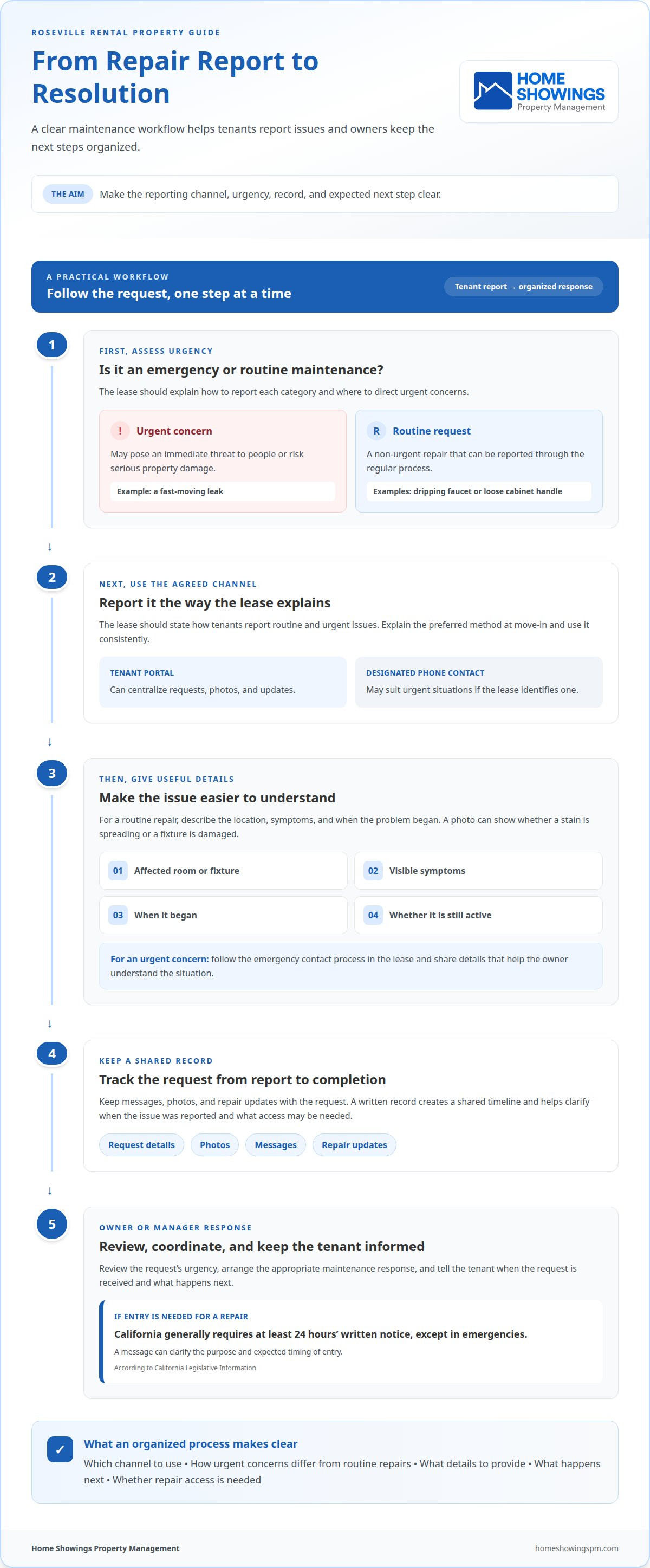
A clear repair process helps tenants report problems and owners protect their rental investment. A lease can distinguish emergencies from routine maintenance and explain how tenants should report each type.
Make the next step clear before a problem occurs. Tenants need to know which channel to use, what details to include, and how urgent concerns differ from routine repair requests.
Separate urgent problems from routine repairs
An emergency may pose an immediate threat to people or risk serious property damage, such as a fast-moving leak. A dripping faucet or loose cabinet handle is usually a routine request. The lease should explain how tenants report each category and where to direct urgent concerns. Clear examples help residents choose the right channel without guessing.
For a routine issue, tenants can describe its location, symptoms, and when it began. A photo can show whether a stain is spreading or a fixture is damaged. For an urgent concern, they should follow the emergency contact process in the lease and provide details that help the owner understand the situation.
Build a usable maintenance reporting process
A straightforward process creates a written record from the first report through completion. A tenant portal can centralize requests, photos, and updates, while a designated phone contact may suit urgent situations if the lease identifies one. Owners should explain the preferred method at move-in and use it consistently, so a resident with a leaking sink knows where to report it.
Record the affected room, fixture, and visible symptoms.
Ask whether the issue is active, such as water still entering the unit.
Keep messages, photos, and repair updates with the request.
Tell the tenant when the request is received and what happens next.
These details help distinguish a new problem from a follow-up on existing work. They also create a shared timeline, reducing misunderstandings about when the issue was reported or what access may be needed.
Keep repair communication organized
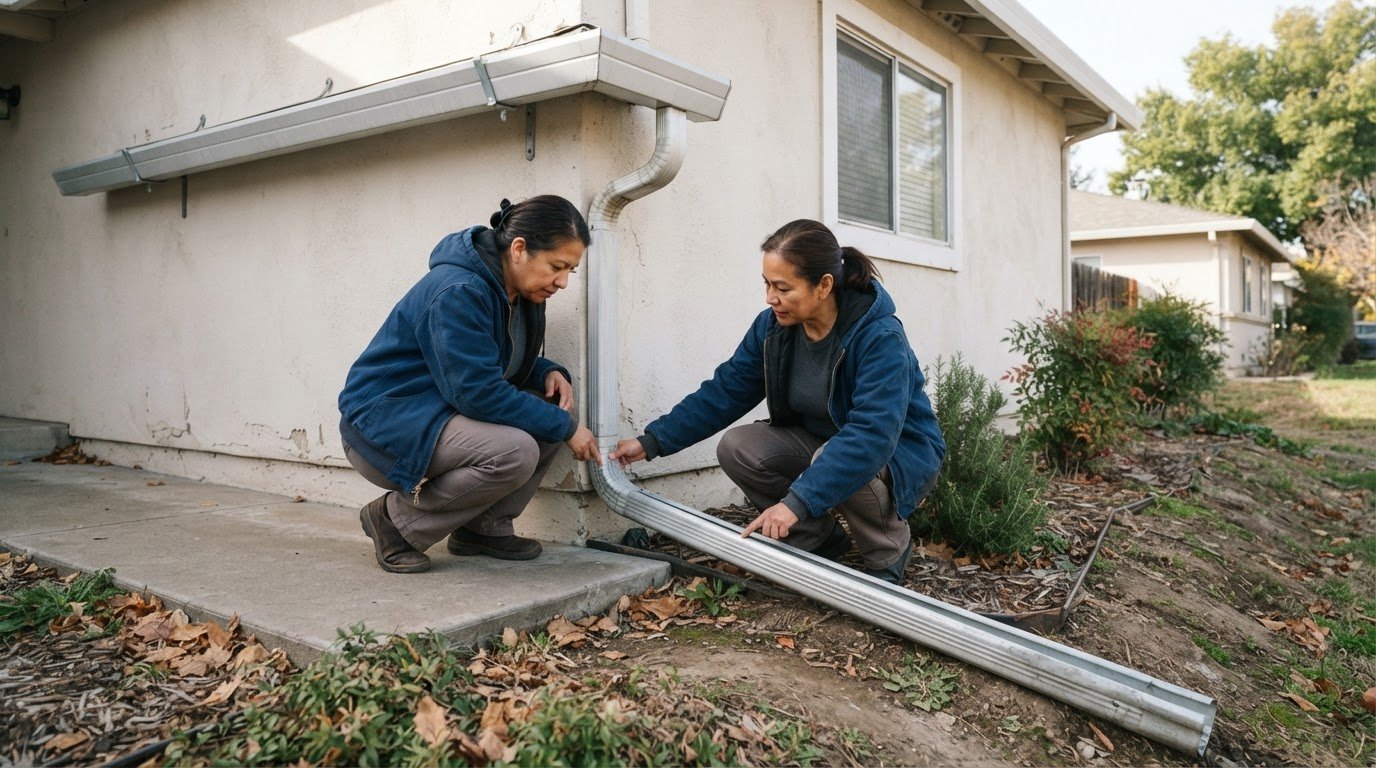
Once a request is logged, the owner or manager can review its urgency, arrange the appropriate maintenance response, and keep the tenant informed. If a repair requires entry, California generally requires at least 24 hours’ written notice, except in emergencies, according to California Legislative Information. A message can clarify the purpose and expected timing of entry.
After completing the work, close the loop by recording what was addressed and inviting the tenant to report any continuing symptoms. For example, if a ceiling stain remains after a leak repair, that update may show the original issue needs more attention. A consistent maintenance process turns reports into trackable work rather than scattered messages.
Owners looking to organize repair coordination can explore property maintenance support as part of a more structured approach to rental oversight.
Tenant communications and customer service
Clear communication helps Roseville owners set expectations before misunderstandings grow. A tenant asking about parking, a guest, or a rent payment needs a direct answer tied to the lease. Consistent responses help residents understand what applies and give owners a reliable record of decisions.
Set clear expectations from the start
At move-in, explain how tenants should raise questions, report changes, and receive important notices. The lease can set expectations for smoking, parking, guests, and pets, while a welcome message can point tenants to those terms. For example, if a resident asks whether an overnight guest may use a parking space, refer to the relevant lease provision and explain the answer plainly.
Make routine information easy to find, too. Keep rent due dates, approved payment methods, grace periods, and late-fee terms together in the lease or a tenant-facing document. If a tenant asks about a payment, state the amount received, the date recorded, and any remaining balance. That specific reply is more useful than a general acknowledgment.
Use a predictable response process
A communication process works best when every message has a clear next step. Acknowledge the tenant’s concern, identify what information you need, and say when you’ll follow up. If a resident reports a parking dispute, ask which space is involved and when it happened. Then record the response and communicate the decision directly to those affected.
Keep messages focused on one concern at a time.
Use neutral wording and avoid assigning blame before reviewing details.
Summarize phone conversations in writing when they affect an agreement.
Tell the tenant who will respond if another person handles the issue.
These steps give owners a consistent approach across properties, including rentals in nearby cities. They also reduce confusion when a question moves between an owner, a manager, and a tenant.
Keep sensitive conversations factual
Discussions about lease concerns or possible evictions call for careful, factual language. Refer to the relevant agreement, describe the issue, and record messages and dates. For example, if a tenant disputes a charge, explain what it relates to and invite a response about that specific entry. Keep unrelated complaints out of the same exchange.
Respectful service doesn’t mean every request must receive the answer a tenant wants. It means explaining the decision, applying lease terms consistently, and documenting any agreed change. In Roseville rental property tenant relations, this steady approach helps owners address concerns without turning routine questions into personal conflicts.
California landlord-tenant law basics
California law sets rules for rent changes, property access, and eviction proceedings. For Roseville landlords, organized leases, notices, and communication records help clarify which rule applies to each situation. Handle a rent question, entry request, or unpaid balance as a separate issue, with its own documentation and next step.
Rent frequency is one limit to track. California state law permits landlords to raise rent no more than twice in every 12-month period, according to California Legislative Information. Before issuing an increase, compare the proposed timing with earlier changes and review the lease terms. A written record of each adjustment helps owners avoid conflicting notices and explain the change clearly to residents.
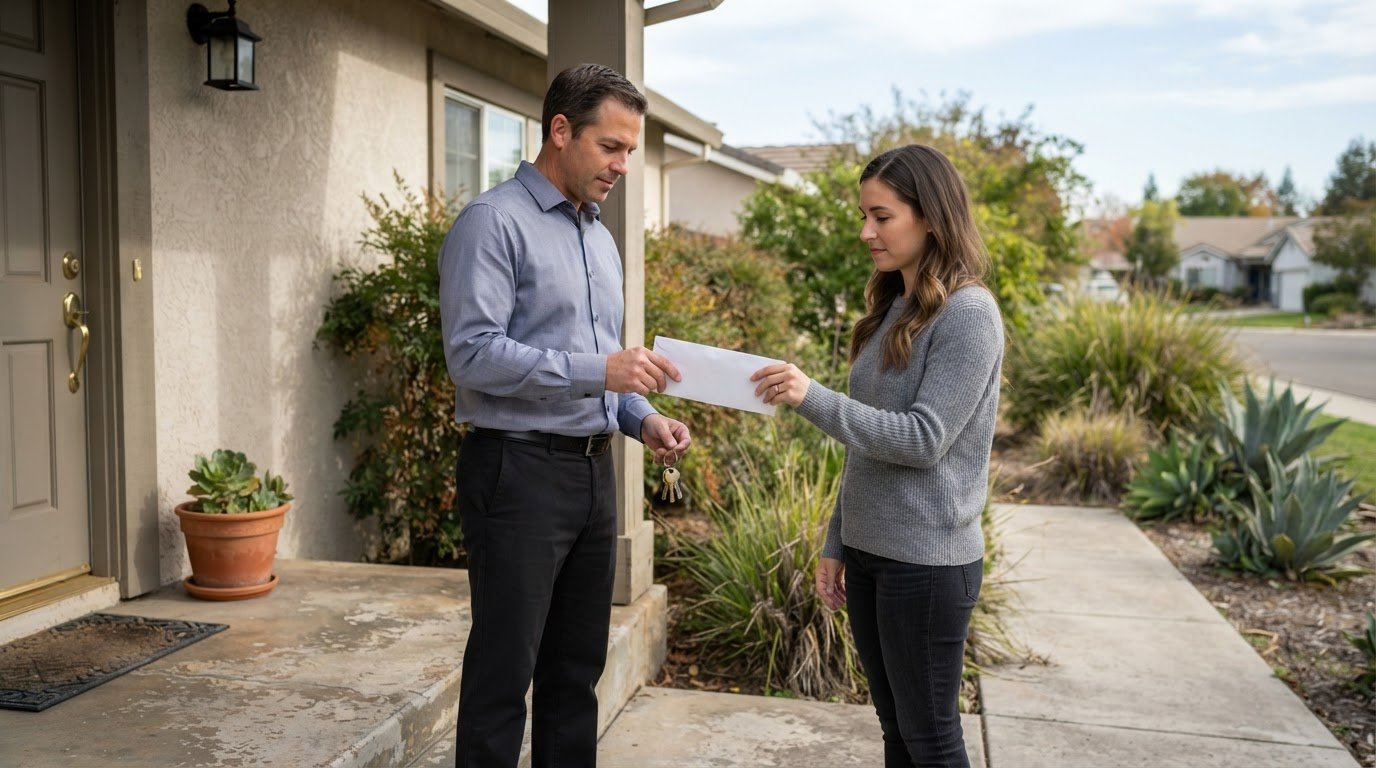
For access to an occupied home, California law generally requires landlords to provide at least 24 hours of written notice before entering a rental unit, except in emergencies, according to California Legislative Information. An entry notice should identify the purpose and time, such as a scheduled inspection or repair visit. Keeping a copy alongside the tenant’s response creates a clear record if questions arise later.
Unpaid rent follows a formal process rather than an immediate lockout. A California landlord may give a 3-day notice for unpaid rent as part of the eviction process, according to California Legislative Information. The notice is a legal step, not permission to remove a tenant personally. Only a court can issue an official eviction order, and landlords cannot forcefully remove tenants. Owners should preserve the lease, payment history, notices, and related messages together.
Record each rent adjustment and its effective date.
Keep written entry notices with the stated purpose and time.
Save payment records and copies of notices relating to unpaid rent.
Use the court process rather than attempting self-help removal.
Fair housing and anti-discrimination rules also apply to Roseville rental decisions. Use consistent, written criteria for screening, leasing, and responding to tenant concerns, rather than basing decisions on personal characteristics. For example, apply the same documented application requirements to each prospective resident and keep records of how decisions were made.
These practices matter throughout a tenancy, not just during a dispute. A file connecting the lease, notices, payment records, and communications gives owners a usable timeline. It also helps residents understand what action is being taken and why, whether the matter concerns access, rent, or a possible eviction.
Dispute resolution and mediation
A tenant dispute can begin with a practical issue, such as a contested charge, parking conflict, or disagreement about lease terms. Owners can reduce confusion by identifying the specific concern, gathering relevant records, and separating facts from assumptions. For example, a rent ledger and dated messages can clarify what payment was received and what remains disputed.
Start with a clear account of the disagreement
Before proposing a resolution, each side should describe the issue concretely. A tenant disputing a repair charge might identify the invoice, repair date, and relevant lease clause. The owner can review the records and explain the decision without raising unrelated complaints. Keeping the discussion focused makes it easier to identify points of agreement.
A written summary can help. Record the concern, documents reviewed, each party’s position, and any next step. If a conversation concerns a parking space, for example, note the space involved and the lease language discussed. This gives everyone a shared reference instead of relying on different memories.
Use mediation to support a workable conversation
Mediation offers a structured conversation with a neutral facilitator. The facilitator helps the tenant and owner explain their views, identify points of agreement, and consider possible solutions. It can help when direct messages have become repetitive but both parties are still open to discussing options. A guided discussion may make disagreements about access, noise, or shared parking easier to address.
Preparation makes the discussion more focused. Bring the lease, relevant messages, payment or maintenance records, and a concise description of the desired outcome. For a disputed fee, the owner might explain the charge while the tenant shares a receipt or timeline. The goal is to explore a practical agreement, not turn every concern into a debate about character.
Define the exact issue and identify the lease term or record involved.
Give each person time to explain their account without interruption.
Separate agreed facts from details that remain disputed.
Write down any resolution, responsibilities, and follow-up actions.
If mediation does not resolve the issue, keep the record organized and distinguish the unresolved point from matters already settled. A disagreement about a repair invoice, for example, should not erase a separate agreement about access. If a notice or eviction is involved, follow the applicable formal process rather than treating mediation as a substitute for legal requirements.
For real estate owners seeking a more organized way to manage tenant concerns, explore support for rental property management.
Home Showings Property Management: Property Management
Home Showings Property Management helps Roseville rental owners coordinate the work behind a well-managed tenancy. Turn to its property management when rental marketing, tenant screening, rent collection, and day-to-day oversight need a consistent process.
Rental Marketing presents a property to prospective renters, while Tenant Screening supports informed leasing decisions. Rent Collection keeps payment administration organized through an online tenant portal. Together, these services help owners manage key points in the rental cycle with clear procedures and records.
To bring these responsibilities into a more coordinated system, contact Home Showings Property Management to discuss property management for your rental.
Make tenant relations part of your rental routine
Strong Roseville rental property tenant relations depend on decisions that remain clear after a lease is signed. Use the next vacancy or renewal to review how your rental is presented, how applicants are assessed, and how responsibilities are documented. A dependable process gives owners and residents a shared reference as circumstances change, instead of relying on memory or informal assumptions.
Choose a practical next step: identify the part of managing your rental that takes the most attention, then decide how you want that work handled going forward. If you’d like support managing your property, contact Home Showings Property Management to discuss your needs. A considered approach can make the next tenancy easier to manage and help you move forward with confidence.
Frequently Asked Questions
Can my landlord evict me without cause in Roseville?
Usually not once just-cause protections apply to a covered rental. In Roseville, AB 1482 protections generally begin after 12 months of continuous occupancy. In a household with multiple tenants, they apply when at least one tenant has lived there for 24 months. For a covered tenancy ended for a no-fault reason, relocation assistance equals one month’s rent or the landlord may waive the final month’s rent. Only a court can issue an official eviction order.
Does AB 1482 apply to my rental in Roseville?
It depends on the unit’s age, type, and occupancy. AB 1482 generally covers Roseville units whose certificate of occupancy was issued at least 15 years before the current date. As of 2026, units with certificates issued in 2011 or later are exempt from its rent cap. Qualifying single-family homes and condominiums may also be exempt under Costa-Hawkins. Just-cause protections have separate occupancy rules, so review the unit and tenancy details together.
Does Roseville have local rent control?
No. Roseville has no separate local rent-control ordinance, so eligible rentals are generally governed by California’s statewide protections. That distinction matters because a rental’s location alone doesn’t establish whether AB 1482 applies. Unit age, property type, and tenant occupancy can affect coverage. For example, two nearby apartments may have different rent-limit treatment if their certificates of occupancy or exemption status differ.
How much can my landlord raise my rent in Roseville?
For a covered rental, the California Tenant Protection Act caps annual rent increases at 5% plus inflation, up to a maximum of 10%, according to California Legislative Information. The applicable CPI period affects the calculation. For covered Roseville units, the listed maximum was 7.7% for August 2025 through July 2026. That figure applies to that period, not automatically to every unit or a later period.
What are Roseville, California landlord-tenant laws and local rental regulations?
California law governs key rental matters, while AB 1482 protections depend on the property and tenancy. For example, state law generally requires at least 24 hours’ written notice before entry, except in emergencies, according to California Legislative Information. State law also limits rent increases and sets procedures related to unpaid rent. Keep the lease, notices, and payment records together to understand how a rule applies to a particular event.
What are Roseville tenant rights regarding repairs, habitability, and maintenance?
Tenants should report repair concerns through the method described in their lease, distinguishing urgent problems from routine requests. A useful report identifies the location, symptoms, when the problem began, and whether it is ongoing. For example, describe whether water is still leaking or a stain remains after a repair. Keep dated messages and photos, along with notes about access arrangements and follow-up, to maintain a clear record of the concern.
What are the rules for rent increases and required notice in Roseville, California?
California landlords must give tenants 30 days’ notice for rent increases of less than 10%, and 90 days’ notice for increases of 10% or more, according to California Legislative Information. State law permits landlords to raise rent no more than twice in every 12-month period, according to California Legislative Information. Tenants can compare the notice date, proposed effective date, and previous increases with these requirements.
What are best practices for communicating with tenants and handling complaints in Roseville rentals?
Use a consistent written channel and keep each complaint focused on a specific issue. A useful response acknowledges the concern, identifies the information needed, and explains the next action. For a disputed charge, refer to the relevant lease term and payment record rather than introducing unrelated concerns. After a conversation, send a brief summary of what was discussed and any agreed follow-up, so both sides share the same reference.

Comments