
Navigating Sacramento rental regulations for rent and duties

Rental compliance in Sacramento depends on both current rules and proposed changes. A short-term rental is a stay of fewer than 30 days, and current city rules require hosts to reside at the property for at least six months annually. The proposed rule would require an owner moving into a rental unit to genuinely occupy it as their primary residence for at least one year.
With requirements that can affect rental income, property upkeep and tenant rights, it’s understandable to want clear answers before making a decision. This guide to navigating Sacramento rental regulations explains how the proposed short-term rental rule, maintenance standards, rent limits, registration duties and relocation assistance affect owners and tenants.
We distinguish current requirements from proposed changes and outline practical duties that shape day-to-day rental management. The goal is to clarify what applies and how organized records, inspections, and timely maintenance support responsible management.
Table of Contents
1. Proposed primary-residence requirement for Sacramento short-term rentals
Sacramento defines a short-term rental as a stay of fewer than 30 days. Current rules require hosts to reside at the property for at least six months annually. A non-primary-residence short-term rental is limited to 90 rental days over the life of its permit. These rules matter when owners compare occasional guest stays with full-time rental use. Sacramento short-term rentals also cannot use a house or apartment exclusively for short-term rental purposes.
The proposed primary-residence requirement adds a separate owner-occupancy issue. An owner moving into a rental unit must genuinely occupy it as their primary residence for at least one year. That requirement concerns an owner move-in, not simply a short-term booking. Owners considering a move-in should distinguish their own actual residence from a property used mainly to host guests. The Sacramento Planning Commission recommended allowing up to four short-term rental units per property on March 13, 2026. That recommendation concerns unit numbers, while the proposed move-in requirement concerns genuine primary residence.
Fair housing rules apply alongside rental and short-term-stay requirements. Sacramento rental property owners must comply with federal, state, and local laws prohibiting discrimination based on protected characteristics. Use consistent, property-related screening criteria for every applicant. For example, document and follow the same process rather than changing standards from one applicant to another. This keeps housing decisions focused on relevant rental qualifications.
Just-cause protections can also shape an owner’s plans. Under Sacramento’s Tenant Protection Program, covered tenants receive just-cause protection after residing in the unit for at least a year. Under AB 1482, protections generally apply after 12 months of occupancy, or after 24 months if all adult tenants have not each lived there for 12 months. Willful violations of just-cause eviction rules can result in liability for up to three times the damages. An owner move-in therefore calls for attention to the tenant’s coverage and the required legal process.
California law governs rental security deposit amounts, handling, and return. Owners should follow the applicable requirements and keep clear transaction records. The amount and permitted uses depend on the rules and circumstances. Sacramento landlords must also follow legal procedures for entering a rental unit. Plan access around the required notice and purpose, rather than treating the property as freely accessible.
Before changing a property’s use, owners can identify its location, current permit status, occupancy pattern, and tenant protections. Then compare those details with the applicable current rules and proposed changes. For instance, a host using a non-primary residence should account for the 90-day permit limit, while an owner moving into a tenant-occupied unit should consider primary-residence and just-cause requirements. This step-by-step review helps separate short-term rental compliance from ordinary tenant obligations.
2. Rental property habitability and maintenance
In unincorporated Sacramento County, the Rental Housing Inspection program routinely inspects residential rentals for compliance with Health and Safety Code requirements. The program also educates owners, managers, and tenants about applicable health and safety standards. Maintenance is therefore more than responding to visible damage: track building systems and address reported concerns before they worsen.
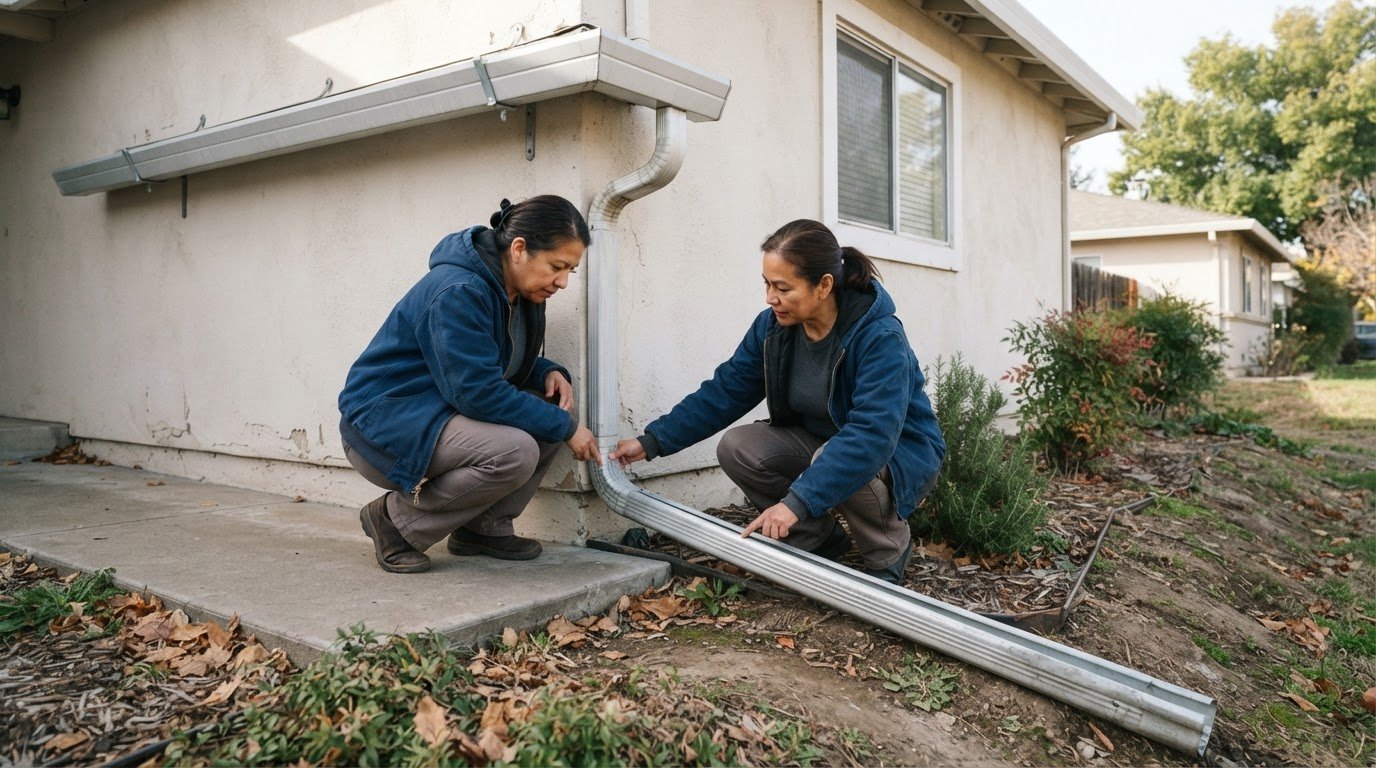
Start with essential systems. Sacramento landlords are responsible for habitable rentals, including functional plumbing, heating, and electrical systems. California law also requires functioning smoke and carbon monoxide detectors. Keep a maintenance record showing when a tenant reported a problem, what response was arranged, and when the work was completed. For example, a report about a failed detector calls for a timely response and a record of its repair or replacement.
Regular inspections can reveal hazards tenants may not notice or report right away. Check that doors and windows have secure locks, entrances have adequate lighting, and exits remain clear. Keep shared areas clean, lit, and in good repair. Arrange periodic electrical system inspections by a qualified electrician. These steps help identify risks but do not replace compliance with applicable safety requirements.
Tenants with safety or habitability concerns can document the issue and notify the owner in writing. In unincorporated Sacramento County, the Rental Housing Inspection program provides information and education about health and safety requirements. Include the affected area, the problem, and when it began in the written report. This gives both parties a clear record for follow-up.
Registration and exemption duties can sit alongside maintenance responsibilities. Every residential rental property in unincorporated Sacramento County must be registered with the Rental Housing Inspection program, whether vacant or occupied. Sacramento County Code 16.20.400 et seq allows qualifying property owners to self-certify rental properties. Within Sacramento city limits, owners of properties subject to the Tenant Protection and Relief Act receive a Property Registration Form and an Exemption Request by mail. Owners remain responsible for ensuring covered properties are registered.
Treat an exemption request and a registration form as separate administrative tasks. Keep received forms with the property records, identify which rental each concerns, and complete the applicable registration duties. Registration does not replace physical upkeep: a registered rental still needs working detectors, sound systems, and maintained shared spaces.
Professional property management can help organize inspection records, maintenance follow-up, and rental documentation. A clear process connects each tenant report with an assessment, repair coordination, and a retained record. For owners overseeing several rentals, this structure helps keep safety tasks and registration paperwork from becoming disconnected responsibilities.
3. Sacramento Tenant Protection Program rent limits
California's Tenant Protection Act of 2019 (AB 1482) took effect on January 1, 2020, according to the California State Legislature. For most qualifying California rental units covered by AB 1482, rent increases are capped at 5% plus the regional CPI change or 10% total, whichever is lower, over a 12-month period, according to the California State Legislature. This is a ceiling, not an automatic rent adjustment. Before changing rent, identify which protections apply to the particular unit.
AB 1482 exempts certain housing built within the last 15 years from its rent-control and just-cause requirements, according to the California State Legislature. Property age is one factor in assessing coverage, but owners should consider the exemption criteria alongside housing type and location. Keep the facts supporting an exemption with the rental records. For tenants, understanding whether an exemption applies helps clarify which protections may govern a proposed increase.
Sacramento’s Tenant Protection Program sets a separate local adjustment limit for covered units. Its rent increase maximum was 8.8% as of July 1, 2024. The program calculates its limit as 5% plus the increase in the California Consumer Price Index for All Urban Consumers for all items. Landlords can increase rent only once every 12 months under the program. These limits make the date and calculation important parts of each rent decision.
For owners navigating Sacramento rental regulations, the first practical step is locating the property. Sacramento city rules apply within city limits, while unincorporated Sacramento County is outside the city’s jurisdiction. Statewide AB 1482 may still cover qualifying units in either area. A Sacramento mailing address alone doesn’t determine whether a unit falls under the city program. Use the property’s actual location, then assess the applicable state and local protections.
A tenant or owner should match the unit to the relevant rules before relying on a cap. Review the address, whether the property falls under Sacramento’s Tenant Protection and Relief Act, and any state exemption. Being within Sacramento city limits doesn’t mean every rental qualifies for the local program. Likewise, being outside the city doesn’t automatically remove a unit from AB 1482 coverage.
Before proposing an increase, compare the last increase date with the applicable 12-month period. Then determine the governing cap and calculate the permitted change under its formula. Keep the prior rent, effective date, calculation, and tenant communication together. For example, an owner can record the CPI figure used and how it was combined with the applicable base percentage. This gives both parties a clear explanation of the proposed amount.
A practical approach to navigating Sacramento rental regulations separates state rules from Sacramento’s local program. The California Legislature establishes AB 1482’s coverage and formula, while the city program has its own eligibility and adjustment provisions. Don’t apply the local maximum automatically to every rental, or assume the statewide cap governs every covered city unit. Determine coverage first, then document the calculation and notice for the tenant.
4. Landlord registration responsibility
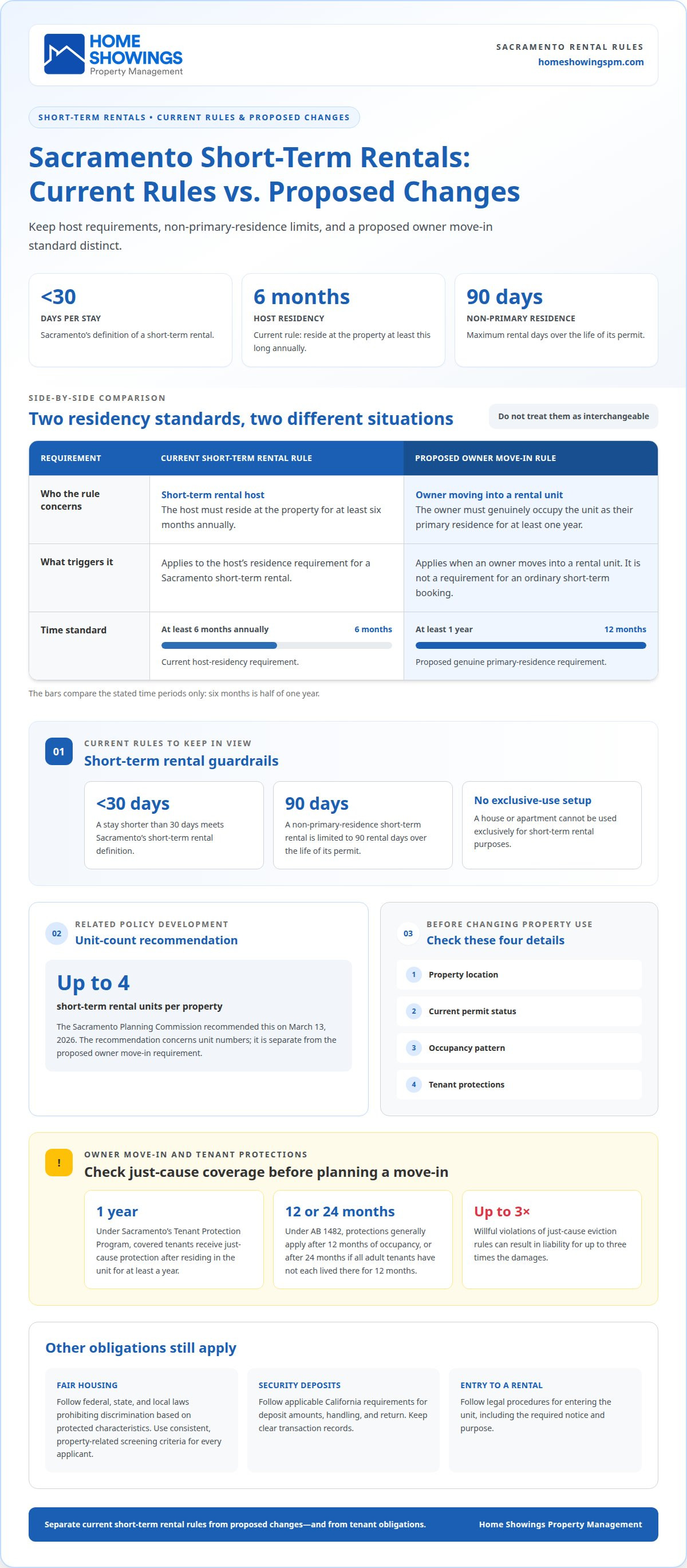
Registration duties in Sacramento depend first on a property’s location. In unincorporated Sacramento County, every residential rental must be registered with the Rental Housing Inspection program, whether vacant or occupied. Include empty units in the registration review rather than waiting for a tenant to move in. Requirements can differ across California’s local jurisdictions.
Sacramento County Code 16.20.400 et seq allows qualifying property owners to self-certify rental properties. Self-certification is an option for qualifying owners, not a blanket exemption from registration. Start by identifying each rental’s location and whether it sits in unincorporated county territory. Then determine whether the property qualifies for self-certification and keep the supporting registration information with its records.
Within Sacramento city limits, a different process applies to properties covered by the Tenant Protection and Relief Act, or TPRA. Owners of covered properties will be mailed a Property Registration Form and an Exemption Request. The owner remains responsible for ensuring the property is registered. Receiving an Exemption Request does not establish that the property is exempt; it is part of the registration process.
Handle mailed paperwork by property. Match each form to the address and ownership records, then keep copies in the relevant rental file. Owners with several properties can use a tracking sheet to distinguish Sacramento city properties from rentals in unincorporated Sacramento County. This helps prevent paperwork for one address from being mistaken for another’s.
Registration and exemption are related but not interchangeable. For a covered Sacramento city property, review both the Property Registration Form and Exemption Request. For an unincorporated county rental, account for the countywide registration requirement, including vacant units. Record which rule applies to each address instead of making assumptions based on a neighboring property.
Organize records by property address to make the process easier to manage. Keep the registration form, any exemption request, self-certification materials, and relevant correspondence together. Note whether the address is within Sacramento city limits or unincorporated county territory. This provides a clear reference when a unit becomes vacant, occupancy changes, or new paperwork arrives.
For example, an owner with a vacant county rental and a TPRA-covered city rental has separate registration actions to track. The county unit must be registered even while vacant. For the city rental, the owner must ensure registration and handle the mailed forms. A location-based checklist helps assign tasks correctly, keep records accessible, and avoid overlooking an address in Sacramento’s varied regulatory landscape.
5. No-fault eviction relocation assistance
For no-fault evictions, landlords are typically required to provide relocation assistance equal to one month's rent or waive one month's rent. Section 8 voucher acceptance is a separate issue; relocation assistance alone doesn't establish whether a landlord must accept a voucher. Treat these as distinct compliance questions, not interchangeable tenant benefits.
First, determine whether a proposed termination is a no-fault eviction. The reason matters because the relocation assistance described here applies to no-fault cases, not every tenancy ending. Then establish the tenant’s rent for the relevant period. That figure determines the assistance amount if the landlord chooses payment rather than waiving rent.
The options work differently. A landlord can provide relocation assistance equal to one month's rent or waive one month's rent. That example illustrates the calculation only; the actual amount is based on the rent for the tenancy.
Keep the decision and supporting records clear. Document the no-fault basis, the rent used to calculate assistance, and whether the landlord pays or waives rent. If rent is waived, record the month covered and communicate the arrangement in writing. If assistance is paid, retain a record of the amount and when it was provided. These details help both parties understand how the obligation was handled.
Relocation assistance does not replace the legal eviction process. Sacramento landlords must follow required procedures, including proper notice and necessary paperwork. Just-cause protections may also apply: Sacramento’s Tenant Protection Program covers tenants after at least a year of residence. Under AB 1482, protections generally apply after 12 months, or after 24 months if all adult tenants have not each resided there for 12 months.
Timing and the stated reason matter. Before serving notice, compare the tenant’s occupancy period and the eviction reason with applicable protections. Keep copies of notices, delivery records, rent calculations, and assistance documentation together. Willful violations of just-cause rules can result in liability for up to three times the damages, making accurate records a practical safeguard.
For an annual review of rental records, separate no-fault cases from other lease changes. A file should show the reason for termination, relevant tenancy dates, the rent for the period, and the assistance option selected. This helps owners track whether the one-month payment or waiver was addressed alongside notice and filing duties.
Organize rent records consistently so a monthly amount can be traced to the correct tenancy period. Keep rent collection records organized as part of your rental documentation process.
Home Showings Property Management: Property Management
Home Showings Property Management helps owners coordinate key parts of the residential rental process. If leasing tasks and regulatory responsibilities are taking time away from other priorities, its Property Management service brings those responsibilities together. Rental Marketing helps reach prospective tenants, while Tenant Screening supports applicant assessment. Rent Collection provides an organized way to handle incoming payments.
These services can help when preparing a home for rent, selecting tenants, or keeping routine rental administration on track. They complement the owner’s responsibility to understand and follow the rules for each property. Sacramento-area owners seeking help with rental management can contact Home Showings Property Management through homeshowingspm.com.
Make your next rental decision with a clear plan
Navigating Sacramento rental regulations is an ongoing part of owning rental housing, not a task limited to the start or end of a lease. Set a routine for reviewing property records, communicating decisions, and tracking obligations. When circumstances change, revisit the property’s location and tenancy details before deciding what to do next. A consistent process keeps decisions organized and clarifies what needs attention.
If rental administration is taking time away from other priorities, Home Showings Property Management can coordinate the process. Its Property Management service supports owners managing residential rentals, while Rental Marketing and Tenant Screening help with leasing preparation. Choose support that fits the tasks you want organized, and keep your property records accessible as decisions move forward.
For a practical conversation about your rental needs, contact Home Showings Property Management. A thoughtful plan can help you approach the next decision with greater clarity and steady confidence.
Frequently Asked Questions
Does Sacramento have rent control, and which rentals are exempt?
Yes. Sacramento has a local Tenant Protection Program, while California’s AB 1482 covers most qualifying rentals statewide. The local program’s annual rent adjustment maximum was 8.8% as of July 1, 2024. AB 1482 exempts certain housing built within the last 15 years from rent-control and just-cause requirements, according to the California State Legislature. For a particular home, identify its location and whether it qualifies for an exemption before applying a cap.
What are Sacramento's rent increase limits and required notice periods?
For most qualifying units under AB 1482, increases are limited to 5% plus regional CPI or 10% total, whichever is lower, over a 12-month period, according to the California State Legislature. Sacramento’s local program has its own cap for covered units. The cap and required notice are separate issues: determine which rule covers the rental, then establish the notice required for that increase and tenancy. Keep the calculation and tenant communication together.
What are the requirements for rental licenses, inspections, and habitability in Sacramento?
Requirements vary by location and rental type. Residential rentals in unincorporated Sacramento County must be registered with its Rental Housing Inspection program, which checks health and safety requirements. Sacramento landlords must maintain functional plumbing, heating, and electrical systems, and California law requires working smoke and carbon monoxide detectors. Short-term rental hosts need a valid permit before listing or renting, plus a business license. Keep registration and maintenance records organized by property address.
What are Sacramento and California eviction rules, including just-cause protections and notice periods?
Covered tenants receive just-cause protections under Sacramento’s Tenant Protection Program after at least a year of residence. AB 1482 protections generally apply after 12 months, or after 24 months if all adult tenants have not each resided there for 12 months. Landlords must follow required procedures, including proper notice and necessary paperwork. The applicable notice period depends on the circumstances, so identify the tenant’s coverage and reason for termination before preparing notice.
What rental rules apply to short-term rentals and Airbnb in Sacramento?
Sacramento treats stays of fewer than 30 days as short-term rentals. Hosts need a permit before listing or renting and must hold a valid business license and collect Transient Occupancy Tax from guests. Current rules also limit some non-primary-residence operators to 90 rental days over the life of their permit. Before listing, identify the property’s permit status, occupancy pattern, and applicable city rules; short-term use cannot make a house or apartment an exclusive guest rental.
What are landlords' and tenants' responsibilities for repairs, utilities, and pest control in Sacramento?
Landlords are responsible for keeping Sacramento rentals habitable, including maintaining functional plumbing, heating, and electrical systems. California law also requires functioning smoke and carbon monoxide detectors. Tenants can report concerns in writing, noting the location, issue, and when it began, and should retain a copy. Address utility arrangements and pest-control responsibilities through the lease and applicable requirements. Document repair reports and follow-up so both parties can track what needs attention.

Comments