
Mastering Rental Property Financial Reporting in Sacramento: A 2026 Landlord Guide

Updated: Jul 17
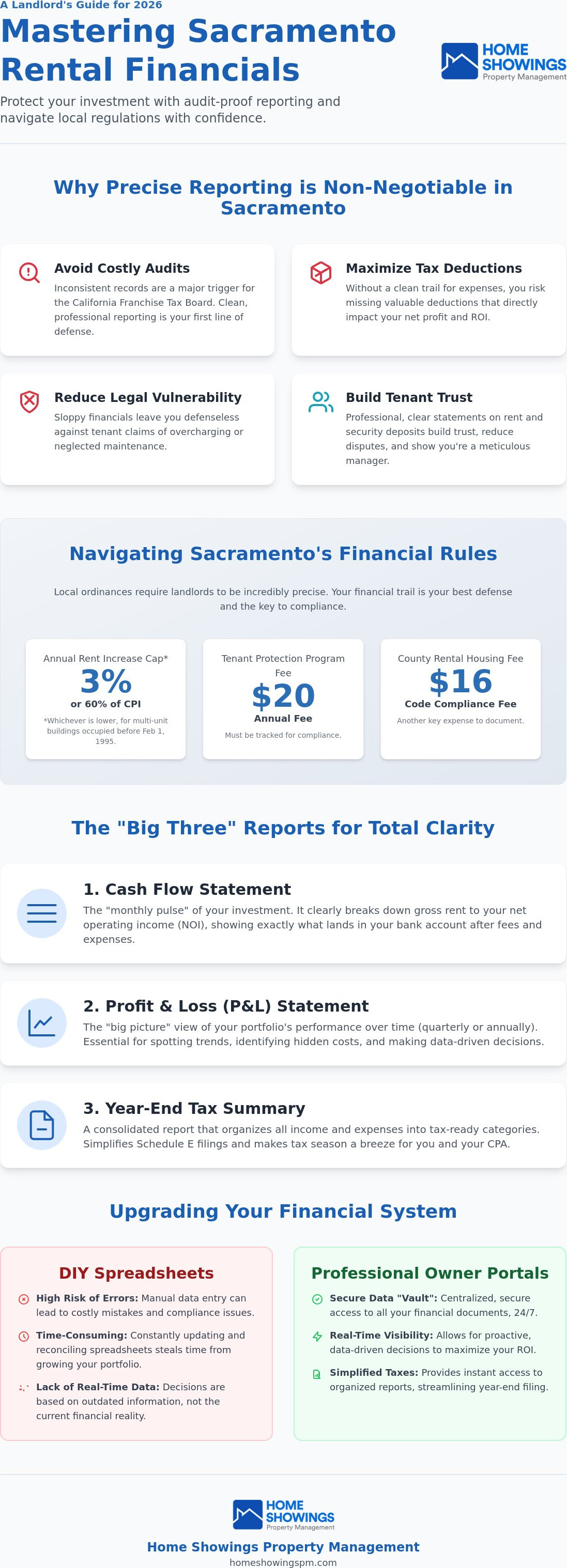
Your shoebox of crumpled receipts isn't just a organizational headache; in 2026, it's a significant legal liability. As Sacramento's rental market stabilizes with projected rent growth returning to 3%, the difference between a thriving investment and a costly audit often comes down to the quality of your paperwork. Mastering rental property financial reporting sacramento is no longer optional when you're balancing the City's $20 Tenant Protection Program fee alongside County utility assessments. You likely feel the weight of these local requirements every time you sit down to balance your books at the end of the month.
We understand that tracking every expense while staying compliant with both Measure Q and AB 1482 can feel like a full-time job. You want to spend your time growing your portfolio, not worrying if a missed deduction or an improperly documented rent increase will trigger a California tax audit. This guide will show you how to build a professional, audit-proof reporting system that provides clear monthly cash flow visibility and makes tax season a breeze. We'll break down the essential reports you need to protect your ROI and ensure you never miss a local compliance deadline again.
Table of Contents
Why Precise Financial Reporting is Critical for Sacramento Landlords
In 2026, the Sacramento rental market demands more than just collecting rent checks; it's a landscape defined by active regulation. If you're still treating your properties as purely passive income, you might be overlooking the legislative shifts that have turned bookkeeping into a form of risk management. Implementing robust rental property financial reporting sacramento is the most effective way to stay ahead of these changes. Your records serve as a "first responder" when protecting your rental property investment in Sacramento from unnecessary legal or financial exposure.
Poor reporting creates real-world risks that go far beyond a messy desk. Inconsistent records are major audit triggers for the California Franchise Tax Board. If you can't produce a clean trail for your expenses, you'll likely miss out on valuable tax deductions that directly impact your bottom line. Beyond taxes, sloppy financials leave you vulnerable. When you lack a clear history of payments and repairs, you're essentially defenseless against claims of overcharging or neglected maintenance.
Financial transparency also plays a vital role in maintaining healthy landlord-tenant relationships. When tenants see professional, clear statements regarding their rent and security deposits, it builds a foundation of trust. It shows them that their home is being managed by a meticulous professional who respects the local rules. This clarity reduces disputes and helps ensure your residents feel secure in their lease agreements.
Navigating Sacramento’s Regulatory Financial Requirements
The Sacramento Tenant Protection Program (TPP) requires landlords to be incredibly precise. For multi-unit buildings occupied before February 1, 1995, you must cap annual rent increases at 3% or 60% of the Consumer Price Index (CPI), whichever is lower. Without detailed financial reporting, it's easy to miscalculate these figures and fall out of compliance. You also need to track the annual $20 TPP fee and the $16 County Rental Housing Code Compliance fee. Your financial trail is your best defense in "Just Cause" eviction scenarios, as it proves you've managed the tenancy according to every letter of the law.
Maximizing ROI Through Data-Driven Decisions
Professional reporting reveals exactly where your money is going. You might notice your maintenance costs are spiking in certain quarters or that vacancy cycles are lasting longer than the city average. For a broader property management overview, it's clear that financial oversight is the backbone of any successful portfolio. By comparing year-over-year data, you can spot "hidden" costs and adjust your strategy to match the current Sacramento median rent of $1,900. There's a significant psychological benefit to "set and forget" professional reporting; it replaces the anxiety of the unknown with the confidence of hard data.
The "Big Three" Reports Every Property Manager Should Provide
A rental property financial report is a structured summary of income, expenses, and capital expenditures used for tax and performance tracking. In our local market, having these documents at your fingertips is the true hallmark of a professional property manager. While some firms only send a vague summary at the end of the month, modern rental property financial reporting sacramento should offer real-time visibility. Waiting for a paper statement often leads to reactive decision-making, whereas digital access allows you to be proactive. This level of transparency ensures that when tax season arrives, your 1099 process and Schedule E filings are already organized and ready for your CPA.
The Cash Flow Statement: Your Monthly Pulse
This report acts as the heartbeat of your investment. It breaks down the journey from gross rent to your net operating income (NOI) with absolute clarity. When you can see exactly how management fees and recurring utilities are deducted before the funds hit your bank account, you gain a sense of controlled stability. It identifies the "bottom line" that actually arrives in your pocket. This allows you to plan for upcoming mortgage payments or personal expenses without any guesswork or mid-month surprises.
Profit and Loss (P&L): The Big Picture
While the cash flow statement tracks movement, the P&L tracks financial health over time. This report categorizes every dollar to align with IRS guidelines on rental income, making it an essential tool for an audit-proof year. It helps you distinguish between standard wear and tear and significant capital improvements that must be depreciated. In Sacramento, we use this to track seasonal trends, such as spikes in SMUD bills or increased landscaping costs during the dry summer months. If you're tired of guessing your monthly profit, exploring a transparent owner portal can provide the clarity you need.
The Tenant Ledger: Granular Accountability
The tenant ledger provides a line-by-line history for each resident. It monitors payment dates, late fees, and any outstanding balances with surgical precision. If a legal dispute or security deposit claim ever arises, this ledger is your primary piece of evidence. It ensures total transparency for both you and the resident. By maintaining a clear record of every transaction, you protect yourself from claims of accounting errors and demonstrate a high level of professional oversight that residents respect.
DIY Spreadsheets vs. Professional Management Portals
If you're managing a single unit in Midtown, a spreadsheet might seem like a cost-effective solution. However, there's a thin line between saving a few dollars and creating a massive administrative burden. Manual data entry remains the leading cause of financial leakage in rental portfolios. It's easy to overlook a small repair invoice or mistype a utility payment when you're juggling multiple responsibilities. These small errors compound over time, leading to a distorted view of your actual ROI and creating headaches during tax season. Modern rental property financial reporting sacramento relies on automated systems to eliminate these human errors before they become costly problems.
Storing sensitive tenant information in unencrypted files also poses a significant security risk. If your personal laptop is lost or your cloud account is compromised, you could be liable for data breaches involving Social Security numbers or banking details. A professional "Digital Vault" through an online rent collection property management system solves this by encrypting data and automating the entire reporting trail. This ensures your records are both accurate and secure without requiring hours of manual labor. When looking for tax tips for landlords, financial experts often emphasize the importance of distinct, verifiable records that only a professional system can provide.
The Hidden Cost of "Free" Spreadsheets
While spreadsheets don't have a monthly subscription fee, they aren't actually free. Most DIY landlords spend roughly 5 to 10 hours a month on manual reconciliation. If you value your time at a professional rate, that "free" tool is costing you hundreds of dollars every month. Formula errors are another silent killer; a single broken cell can lead to incorrect tax filings and potential penalties. As you scale beyond your first investment, the complexity of tracking multiple units makes manual systems nearly impossible to maintain. Professional rental property financial reporting sacramento scales with you, ensuring accuracy whether you have two doors or twenty.
The Power of the Owner Portal
An owner portal functions as your 24/7 window into property performance. You don't have to wait for an email response to find a lease agreement or a specific invoice. Everything is categorized and ready for export whenever you need it. Integrating digital receipts directly into the financial workflow means you never have to hunt for paper copies again. This setup facilitates faster communication between you and your management team, as everyone is looking at the same real-time data. It transforms your reporting from a monthly chore into a strategic advantage for your portfolio.
How to Organize Your Rental Finances for an Audit-Proof Year
Organizing your books isn't just about neatness; it's about building a legal firewall around your assets. If you've been using one bank account for both personal groceries and property repairs, you're creating a significant vulnerability. The first step toward professional rental property financial reporting sacramento is to separate your business and personal banking immediately. This single move simplifies your tracking and ensures that if an auditor ever comes knocking, your business records remain distinct and defensible.
Once your accounts are separate, you should implement a standardized chart of accounts for every property in your portfolio. This provides a consistent "language" for your expenses, such as insurance, taxes, and utilities. To avoid the stress of tax season, you'll want to digitize every receipt at the point of purchase. Thermal paper receipts fade quickly, but a digital scan is permanent and searchable. We also recommend conducting quarterly financial reviews. These check-ins allow you to catch anomalies early, such as a sudden spike in a utility bill that might indicate a hidden water leak before it becomes a major expense.
Your financial records must also reflect your compliance with california tenant screening laws. When you collect application fees, those funds must be tracked with precision to prove they were used for actual screening costs and not as additional profit. Keeping these records synchronized ensures that your operational habits and your financial reporting tell the same story of professional oversight.
Categorizing Maintenance vs. Improvements
The IRS treats a new roof differently than a simple faucet repair, and your reports should reflect that distinction. Maintenance items are generally expensed in the year they occur, while capital improvements must be depreciated over several years. Documenting these as "Property Preservation" helps justify the long-term value of your investment. We always suggest working with vendors who provide detailed, digital-ready invoices. This level of detail makes it easier for your CPA to maximize your deductions without guessing at the nature of the work performed.
To further optimize your business strategy, you can discover SD Mayer and their specialized accounting advisory and outsourced CFO solutions, which are designed to help growing enterprises manage complex financial requirements.
Managing Security Deposits in California
California law is incredibly strict regarding resident funds. You must keep security deposits in a separate, non-commingled account to avoid legal penalties. When a tenant moves out, you have a strict 21-day window to provide a final disposition and return the remaining funds. Every deduction you make must be documented with receipts or hourly labor logs to withstand a potential Small Claims challenge. If you find these administrative hurdles overwhelming, our Sacramento property management team can implement these systems for you, ensuring every deposit is handled with total legal precision.
Streamlining Your Sacramento Investment with Home Showings Property Management
Managing a rental portfolio shouldn't feel like a second career. At Home Showings Property Management, we act as your tech-savvy local guide, removing the administrative burden of ownership through advanced operational systems. Our approach to rental property financial reporting sacramento is designed to replace your anxiety with a feeling of controlled stability. We believe that transparency is the foundation of a successful partnership, which is why we provide tools that keep you informed without requiring you to manage the day-to-day details yourself.
The Home Showings Owner Portal serves as your 24/7 window into property performance. Whether you're traveling or simply relaxing at home, you can access lease agreements, maintenance invoices, and real-time cash flow statements with a few clicks. This digital transparency ensures you're never left guessing about the status of your investment. While our software provides the efficiency, our local experts provide the oversight. Every financial report is reviewed by a person who understands the Sacramento landscape, ensuring that your records are accurate, compliant, and ready for your tax professional.
We take the guesswork out of the complex math associated with Sacramento’s rent control ordinances. Navigating the specific caps of the Tenant Protection Program alongside statewide AB 1482 requirements is a significant challenge for DIY landlords. Our team meticulously tracks these variables, ensuring every rent adjustment is legally sound and properly documented. This meticulousness protects your ROI and provides the peace of mind that your investment is being managed according to the highest professional standards.
Beyond the Numbers: Property Preservation
Precise financial reporting is a powerful tool for property preservation. We link your financial data directly to our regular property inspections, allowing us to spot trends that others might miss. If your ledger shows recurring costs for a specific system, we use that data to recommend proactive maintenance rather than waiting for a total failure. This data-driven approach helps prevent major repair costs and ensures your property maintains its value over the long term. By focusing on these operational details, we help you build sustainable wealth through stable, efficient management.
Get Started with a Free Rental Analysis
If you're ready to see how professional oversight can transform your finances, we invite you to compare your current performance against Sacramento market benchmarks. We can demonstrate our rental property financial reporting sacramento systems in action, showing you exactly how we categorize expenses and track compliance. This is an opportunity to see the "Digital Vault" for yourself and understand how we maximize your investment's potential. Schedule your professional financial consultation today and take the first step toward a worry-free ownership experience.
Secure Your Sacramento Investment Future
Transitioning from a manual "shoebox" approach to a professional, audit-proof system is the most effective way to protect your hard-earned ROI. By implementing standardized reports like the Cash Flow Statement and Tenant Ledger, you gain more than just clarity; you gain a powerful legal defense in our highly regulated market. Professional rental property financial reporting sacramento ensures you stay ahead of local fees and state-wide compliance without the monthly headache of manual reconciliation.
You don't have to manage these complex financial trails alone. Our team provides the stability and meticulousness your portfolio deserves through dedicated digital owner portals and audit-ready systems. We combine modern efficiency with deep local expertise in Sacramento and Elk Grove to ensure every detail is managed with care. Simplify Your Sacramento Rental Reporting with Home Showings Property Management.
Your investment's success is built on clear data and reliable oversight. We're here to help you turn those numbers into a worry-free experience and a foundation for long-term wealth.
Frequently Asked Questions
What financial reports should a property manager provide monthly?
A professional manager should provide a Cash Flow Statement, a Profit and Loss (P&L) statement, and a detailed Tenant Ledger every month. These documents offer a comprehensive view of your monthly income, year-to-date performance, and granular payment history. Having these reports delivered through a digital portal ensures you have 24/7 visibility into your investment without waiting for a paper statement to arrive in the mail.
How long should I keep financial records for my Sacramento rental property?
You should maintain your financial records for at least seven years to stay protected during potential tax audits or legal disputes. While the IRS generally suggests three years, California's complex regulatory environment makes a longer retention period a safer bet. Digital storage is the most efficient way to manage this volume of data, as it prevents physical clutter and ensures documents remain legible for years to come.
Does California law require a separate bank account for security deposits?
While California law doesn't strictly mandate that individual landlords use a specific "trust account," it's a critical best practice to keep these funds in a separate, non-commingled account. Professional property managers are required by the Department of Real Estate to use trust accounts. For owners, keeping these funds isolated ensures you can always meet the strict 21-day return deadline without experiencing personal liquidity issues.
How can I track deductible expenses for my rental property effectively?
The most effective way to track deductions is to digitize every receipt at the point of purchase and categorize it immediately within a standardized system. This proactive approach to rental property financial reporting sacramento ensures that every SMUD bill, landscaping invoice, or hardware store run is captured for your CPA. It eliminates the stress of year-end reconciliation and ensures you don't miss out on valuable Schedule E tax benefits.
What is the difference between a cash flow statement and a P&L for rentals?
A cash flow statement tracks the actual movement of money into and out of your bank account, while a P&L tracks overall profitability over a specific period. Your cash flow statement tells you exactly what funds are available for your mortgage payment today. In contrast, the P&L includes non-cash items like depreciation and helps you understand the long-term financial health and tax liability of your rental portfolio.
How does Sacramento’s Tenant Protection Program affect my financial reporting?
The Tenant Protection Program (TPP) requires you to meticulously document every rent increase and the payment of the mandatory $20 annual program fee. You must be able to prove that any increase stays within the 3% or 60% CPI cap allowed for older multi-unit buildings. Your financial reports act as your primary evidence of compliance if the City ever questions your registration or rent adjustment history.
Can I use digital signatures for financial and lease documents in California?
Yes, digital signatures are fully legal and binding in California under the Uniform Electronic Transactions Act (UETA). Using digital platforms for leases and financial agreements creates a secure, time-stamped audit trail that is much harder to dispute than traditional paper records. It also allows you to store these critical documents in your owner portal for instant access whenever you need to review a term or payment history.
Why is a tenant ledger important for legal compliance in Sacramento?
A tenant ledger provides an undisputed, line-by-line history of every payment, late fee, and credit applied to a resident's account. If you're ever involved in a "Just Cause" eviction or a security deposit dispute in Small Claims court, the ledger is your most powerful piece of evidence. It demonstrates that you've managed the tenancy with transparency and professional oversight, which is vital for maintaining your reputation as a fair landlord.


Comments