
How to Set Up a Roseville Lease Renewal and Set Rent and Terms

Start the renewal conversation about 60-90 days before the lease ends; California landlords are advised to begin 90 days ahead. This Roseville landlord guide to lease renewals shows how to use that time to review the tenancy, compare local rents, and shape practical renewal terms. A clear written offer gives both you and your tenant time to consider the next step.
It’s natural to weigh a rent adjustment against the value of keeping a reliable tenant. Compare similar rentals, consider the property’s condition and current lease, and choose terms that work for both sides. A renewal is more than a new rent figure: it’s a chance to clarify expectations and plan for a stable tenancy.
This Roseville landlord guide to lease renewals explains how to organize the timeline, assess comparable rents and proposed terms, choose between fixed-term and month-to-month arrangements, and prepare a written offer. A clear process helps you make an informed decision and gives your tenant a straightforward way to respond.
Table of Contents
How do I set up a lease renewal for tenants?
Start early, discuss plans directly, compare local rents, then put agreed terms in writing. In California, a month-to-month tenancy may continue periodically or shift to a fixed term; ending a tenancy requires 30 days’ notice when the tenant has lived at the property for more than one year.
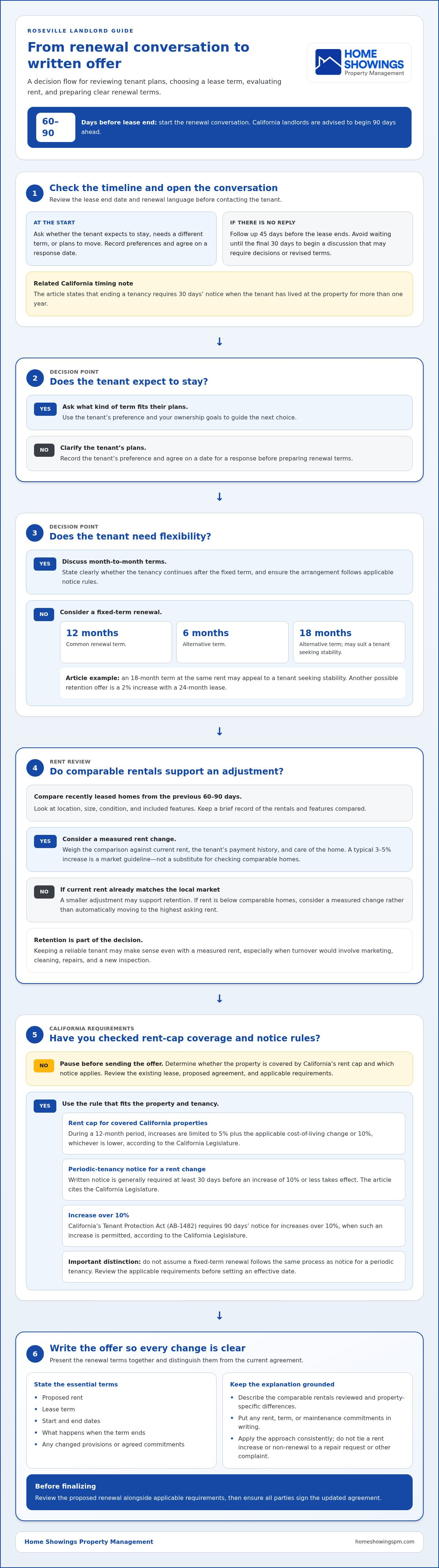
Contact Tenants Before Lease ExpirationContact tenants 60-90 days before the lease expires to discuss renewal plans. California landlords are advised to begin the process 90 days before the lease ends, leaving time to consider options and prepare documents.Review the lease agreement’s end date and any renewal language before reaching out. Use your rental property calendar to track each deadline, and avoid waiting until the final 30 days to start a discussion that may require tenant decisions or revised terms.
Discuss Renewal PlansAsk whether the tenant expects to stay, needs a different lease term, or plans to move. A direct conversation can surface practical concerns, such as maintenance needs or uncertainty about future plans, before you prepare an offer.Record the tenant’s preferences and agree on a date for a response. If they haven’t replied, follow up 45 days before the lease ends. Keep the discussion focused on clear choices, such as a fixed-term renewal or continued month-to-month tenancy.
Set Market-Based Rent and Retention GoalsCompare the rental with similar Roseville homes by location, size, condition, and included features. Review recent listings and completed leases rather than relying on a broad area average that may not reflect your property.Balance the comparison against the tenant’s payment history and care of the home. Keeping a reliable tenant may make sense even with a measured rent, especially when turnover would involve marketing, cleaning, repairs, and a new inspection.
Offer Longer Terms and IncentivesOffer a term that fits both the tenant’s plans and your ownership goals. A 12-month renewal is common; six- or 18-month terms can provide alternatives. For a tenant seeking stability, an 18-month term at the same rent may be more appealing than a shorter agreement.Consider a modest rent adjustment paired with a longer commitment. One possible retention offer is a 2% increase with a 24-month lease. You might also prioritize agreed maintenance work, based on an inspection, as a practical incentive. Put the rent, term, and any commitments in writing.If the tenant prefers flexibility, discuss month-to-month terms. State clearly whether the tenancy continues after the fixed term, and ensure the arrangement follows applicable notice rules.
How Should Current Rent and Proposed Lease Terms Be Evaluated?
Compare the proposed rent with similar Roseville rentals, then review California requirements before sending an offer. Keep the market analysis, legal considerations, and tenant communication distinct so each decision has a clear basis.
Compare Proposed Rent With the MarketCompare your rental with similar homes, focusing on location, size, condition, and included features. Recently leased comparable rentals from the previous 60 to 90 days can provide a useful reference point for renewal pricing.Then weigh the comparison against your current rent and tenant’s record. A typical increase of 3-5% is a market guideline, not a substitute for checking comparable homes. If your rent already matches the local market, a smaller adjustment may support retention. If it falls below comparable rents, consider a measured change rather than automatically moving to the highest asking rent.Keep a brief record of the listings and features you compared. This gives you a practical explanation if the tenant asks how you arrived at the proposed amount.
Check Rent-Increase and Notice RulesBefore presenting a rent increase, determine whether the property is covered by California’s rent cap and which notice applies. For covered California properties, rent increases during a 12-month period are limited to 5% plus the applicable cost-of-living change or 10%, whichever is lower, according to the California Legislature.For a periodic-tenancy notice changing rent in California, written notice is generally required at least 30 days before an increase of 10% or less takes effect, according to the California Legislature. California’s Tenant Protection Act (AB-1482) requires 90 days’ notice for rent increases over 10%, when such an increase is permitted, according to the California Legislature.Don’t assume a fixed-term renewal follows the same process as notice for a periodic tenancy. Review the existing lease, proposed agreement, and applicable requirements before setting an effective date.
Explain the Proposed TermsCommunicate the new rent, start date, lease term, and any changed provisions together. A written explanation should distinguish the proposed renewal from the current agreement, so tenants can see what changes when the lease expires.Keep the explanation factual: describe the comparable rentals reviewed and property-specific differences, such as condition or included features. Don’t tie a rent increase or non-renewal to a tenant’s repair request or other complaint. Document the market basis and apply your approach consistently.California Civil Code Section 1946.2 addresses just-cause requirements after qualifying occupancy and a tenant’s refusal to sign a lawful renewal of similar duration with similar provisions, according to the California Legislature. Review that requirement alongside the proposed renewal before deciding how to proceed.
Comparable rents and proposed lease terms
Use comparable rentals to shape an offer, then choose a duration and conditions that fit your plans. This Roseville landlord guide to lease renewals helps owners assess the choices systematically, from market evidence to written terms.
Assess Comparable RentsCompare rentals with similar locations, sizes, conditions, and included features. A home with updated appliances or a garage may not be a fair match for one without them.Use recently leased properties, not just asking rents, to gauge what tenants have agreed to pay. Keep notes on the examples that support your proposed terms.For a Roseville landlord guide to lease renewals, treat each comparison as evidence, not an automatic pricing instruction. Adjust your recommendation for differences in amenities and upkeep.
Consider Reasons for Shorter TermsWrite down the specific reason before offering a lease term shorter than your usual renewal. Planned renovations, personal use, or uncertainty about future plans may affect how long you can commit.Explain the reason plainly and keep it consistent with the proposed dates. Don’t use a shorter term to pressure tenants into accepting different rent or other conditions. Review applicable California requirements before making the offer, and keep a record of the business reason and communication.
Offer and Negotiate Renewal TermsPresent two clear options when both fit your plans. These sample terms show how to weigh duration and rent together.Ask which option fits the tenant’s plans, then consider a counteroffer without relying on a verbal change. Confirm the rent, lease start and end dates, and any increase schedule in writing. If the tenant requests a different duration, weigh its stability against your own timeline before agreeing.
Discuss Incentives and Flexible TermsConsider a specific, manageable incentive that addresses a concern the tenant has raised. For example, document an agreed maintenance improvement or offer a longer term with a defined rent schedule. State who will complete the work and when, rather than relying on an informal promise.If the tenant needs flexibility, compare a shorter fixed term with a longer commitment before revising the lease. Include every accepted change in the renewal document, including maintenance responsibilities, house rules, and required disclosures. Have all parties sign the updated agreement before treating its new terms as effective.
Offering month-to-month and longer-term renewal options
Roseville landlords aren’t required to offer a fixed-term renewal simply because a lease is expiring. If you choose to renew, discuss terms early; contacting tenants 60-90 days before expiration gives both sides time to decide.
Compare the tenant’s preferred flexibility with your plans for the rental property. The right option depends on how long you want predictable occupancy and whether you may need the home back.
Offer a fixed term when predictable occupancy matters. A 12-month renewal can suit owners who don’t expect to need the rental within the next 12 months. If a tenant wants a longer commitment at the same rent, consider an 18-month term. State the start date, end date, rent, and any scheduled change clearly in the proposed lease agreement.Before proposing a term, review the property’s condition and your plans. If maintenance or personal use could affect availability, don’t promise a longer period than you can honor.
Offer month-to-month terms when flexibility matters to either party. This arrangement may suit tenants who aren’t ready to commit to a full year or owners whose plans may change. Set the rent close to or at current market rates, and explain how the tenancy will continue after the fixed term ends.Don’t assume a month-to-month tenancy begins automatically unless the lease or the parties’ agreement provides for it. Put the arrangement and rent in writing, then follow applicable notice requirements for later changes.
Weigh flexibility against potential turnover before deciding. If a tenant leaves, marketing, cleaning, and repairs may be needed before a new tenancy begins. A longer renewal can avoid some disruption, but its duration must fit your plans for the property.Season matters, too. If a lease expires in December-February, filling a vacancy can be harder. Weigh the timing against the tenant’s record, the home’s condition, and expected maintenance needs.
Present options that make the trade-offs visible. For example, offer a 12-month fixed term at one rent and a 24-month option with a defined increase cap. A tenant who needs flexibility could instead consider month-to-month terms at a rent aligned with market conditions.Invite the tenant to suggest a preferred term, then record any agreed changes. Both parties should sign a renewal before its terms take effect. Make the end date explicit, along with whether the tenancy ends or continues month-to-month.
Preparing a renewal offer letter
Turn the agreed renewal into a clear written offer before the current lease ends. A focused letter helps tenants understand the proposed rent, dates, and next steps, while keeping the revised agreement organized.
Identify the rental property and everyone covered by the offer. Include the property address, tenant names, and the proposed renewal start date. Confirm that every occupant over age 18 appears on the renewal contract, so the written agreement reflects the household accurately.Use the current lease to confirm names and existing terms. If an occupant’s status has changed, resolve that detail before preparing the final document so the paperwork doesn’t contain conflicting information.
State the proposed rent and payment terms plainly. Include the amount, effective date, and any changes to payment arrangements. If the offer includes a rent adjustment, show both the current and proposed amounts so tenants can compare them easily.Keep the figures consistent in the offer letter and renewal agreement. The tenant should not see one amount in the letter and another in the document they’re asked to sign.
Set out the renewal term and what happens after it ends. Name the lease’s start and end dates, then state whether the tenancy will end or continue month-to-month. This clarifies whether the tenant must leave or a periodic tenancy will continue.For example, an offer can state the fixed renewal period and explain the next tenancy arrangement in the same section. Don’t rely on a verbal conversation to explain a date that changes the agreement.
List each changed term alongside the provisions that remain. Address maintenance responsibilities, required disclosures, and house rules, along with agreed repairs or other commitments. If an incentive depends on completing work, describe the work and timing instead of making a vague promise.A renewal document is typically one to two pages long. Keep it concise, but don’t omit a term that affects rent, occupancy, repairs, or the tenant’s obligations.
Give tenants a clear way to accept or respond, then collect signatures from all parties. Having the landlord and tenant sign the updated lease helps document the agreed terms. Keep the signed copy with current lease records and use it to track rent and dates.Don’t raise rent after the tenant has signed the renewal. If coordinating renewals alongside rental operations would help, explore residential property management support.
Home Showings Property Management: Property Management
Home Showings Property Management provides residential property management for owners who want support with the rental process. When a renewal is part of a broader workload, rental marketing, tenant screening, and rent collection help organize key responsibilities. Property maintenance also helps preserve the home while tenants live there.
Consider property management when coordinating tenants, rental operations, and property needs takes more time than you can comfortably give. Home Showings Property Management supports these connected responsibilities while keeping owners informed. Contact the team to discuss property management for your rental in Elk Grove, Sacramento, Folsom, Roseville, Natomas, Rancho Cordova, North Lake Sacramento, El Dorado Hills, Citrus Heights, or Carmichael.
Make Each Renewal Part of a Steady Rental Plan
Use each renewal to align the rental’s next chapter with your broader ownership plans. Consider how the home’s condition, income priorities, and future use fit together. A consistent process can make the next decision easier, while clear communication helps maintain a constructive landlord-tenant relationship.
This Roseville landlord guide to lease renewals can help you approach the decision systematically. If managing the rental process takes attention away from other priorities, Home Showings Property Management offers rental marketing, tenant screening, and rent collection as part of its property management service. These services support an organized tenancy.
For help with the rental responsibilities connected to your property, contact Home Showings Property Management. You can take the next step at a pace that fits your plans and move forward with greater clarity.
Frequently Asked Questions
Can I Raise My Tenant's Rent?
Yes, you can propose a rent increase before a renewal is signed, subject to applicable limits and notice rules. For covered properties, California limits increases during a 12-month period to 5% plus the applicable cost-of-living change or 10%, whichever is lower, according to the California Legislature. Once a tenant signs a renewal, you can’t raise the rent under that agreement. Keep any proposed adjustment and its effective date clear in writing.
How Should Tenant History, Property Condition and Owner Goals Be Reviewed?
Review these factors together before settling on renewal terms. Consider payment consistency, communication, and how the tenant has cared for the home. Compare that history with the property’s condition, including outstanding repairs or maintenance needs. Then consider your plans: stable occupancy may matter more if you don’t plan to use the property, while upcoming work may affect the term you can offer. Record your reasons to support consistent decisions in future renewals.
What Should Be Included in Renewal Documents and Recordkeeping?
Keep the signed renewal, previous lease, and dated communications together. Save the tenant’s response, proposed changes, and final signed version. For context, retain comparable-rent notes and records of inspections, repairs, and maintenance commitments. A clear file helps you track the terms governing the tenancy and distinguish completed work from requests or promises still awaiting action.
What are California's laws for residential lease renewals and nonrenewal notices?
California rules depend on the tenancy, the property, and the tenant’s occupancy. California Civil Code Section 1946.2 addresses just-cause requirements after qualifying occupancy and a tenant’s refusal to sign a lawful renewal of similar duration with similar provisions, according to the California Legislature. Nonrenewal is distinct from eviction, which is a legal process.
Do California rent control laws or AB 1482 apply to Roseville rentals?
AB 1482 can apply to Roseville rentals, but coverage depends on the property. For covered homes, the rent cap limits increases during a 12-month period to 5% plus the applicable cost-of-living change or 10%, whichever is lower, according to the California Legislature. The law doesn’t apply to properties built within the last 15 years. Determine whether the home is covered before calculating an increase; don’t assume every rental follows the same cap.
What are Roseville's local requirements for rental housing and lease renewals?
Use California’s statewide rules as a foundation, then account for local housing requirements that apply to the Roseville property. Local obligations can depend on the address and housing type, while renewal terms also depend on the existing agreement and tenancy. Keep the rental address, lease version, and relevant property records together to distinguish requirements tied to the home from terms negotiated between landlord and tenant.
How should a landlord calculate a legal rent increase in Roseville, California?
First determine whether the property is covered by California’s rent cap. For covered properties, compare the proposed increase with the lower limit: 5% plus the applicable cost-of-living change or 10% during a 12-month period, according to the California Legislature. Then calculate the allowed amount from the current rent and use that as the ceiling, not a target. For periodic tenancies, also apply the required written notice before the increase takes effect.
What should a Roseville lease renewal agreement include?
Include the tenant and property details, the renewal term, rent, payment terms, and the effective date of each change. State the new end date and what happens after it, such as the tenancy ending or becoming month-to-month. Add agreed maintenance responsibilities, required disclosures, and house rules. Check that all occupants over age 18 appear on the contract, and keep a fully signed copy with the prior lease and renewal correspondence.


Comments