
Handling Tenant Disputes in Rancho Cordova With Clear Steps

A tenant dispute doesn’t have to begin with a legal battle. Handling tenant disputes in Rancho Cordova means addressing disagreements within California landlord-tenant law, which covers leases, security deposits, rent payments, property maintenance, and eviction procedures. Negotiation or mediation can give both sides a structured way to discuss a resolution.
It’s understandable to feel uncertain when a disagreement affects your rental property or home. The next steps depend on what happened, what the lease says, and which legal responsibilities apply.
This article explains the issues California landlord-tenant law covers, common sources of conflict, and how negotiation or mediation may help. It also explains when a dispute may call for legal guidance and how clear records and communication can keep the process organized.
Table of Contents
What Is Landlord-Tenant Law?
Landlord-tenant law sets the rights and responsibilities connected to a rental home. It covers leases, security deposits, rent payments, property maintenance, and eviction procedures. For example, a disagreement about a repair may involve both the lease and responsibility for maintaining the property. Understanding how these issues connect helps owners and tenants focus on the actual dispute, rather than treating every disagreement as an eviction matter.
In Rancho Cordova, the same California landlord-tenant framework applies alongside any relevant local rules. Rancho Cordova became a city on July 1, 2003, and it sits within the Sacramento region. A rental manager’s role is to keep the lease, payment records, repair requests, and communications organized. That record helps clarify what each person agreed to, what happened, and which issue needs attention.
Eviction is a formal legal process, not simply a landlord’s decision to remove a tenant. A landlord-tenant lawyer may represent a landlord or tenant in court over a lease dispute or eviction. The lawyer may also file legal motions and help enforce court orders, including eviction orders. These legal steps differ from routine property oversight, such as documenting a maintenance request or communicating about a lease obligation.
Eviction should generally be treated as a last resort because it can intensify conflict and lead to court proceedings. Before considering it, identify the underlying issue: unpaid rent, a lease disagreement, or an unresolved property concern. Then review the lease, payment history, notices, and messages related to the issue. A specific record, such as a dated repair request and response, can help separate documented facts from assumptions.
If an eviction case reaches court, the parties’ evidence and applicable legal requirements matter. A landlord-tenant lawyer can assess the dispute, represent a party in court, and file motions when appropriate. A lawyer may also help enforce a court order after it is issued. Property oversight helps keep records accessible, but it does not replace legal representation or determine the court’s outcome.
For owners and tenants, handling tenant disputes in Rancho Cordova starts with identifying the issue and preserving relevant records. A property manager who understands the importance of lease terms, maintenance documentation, and consistent communication can help keep routine matters organized. If the disagreement concerns legal rights, court action, or eviction, the distinction matters: management addresses rental operations, while a landlord-tenant lawyer provides legal representation and handles court-related work.
The type of rental can matter when choosing legal help. Landlord-tenant attorneys handle matters involving state laws and local ordinances that govern commercial and residential landlord-tenant relationships. Their work may concern either type of rental, depending on the issue and the attorney’s practice.
Landlord-tenant attorneys may focus on commercial or residential rental issues. When seeking counsel, owners and tenants can describe the type of rental and share the records related to the dispute. A clear account can help a prospective attorney assess whether the matter fits their practice.
California landlord-tenant legal compliance
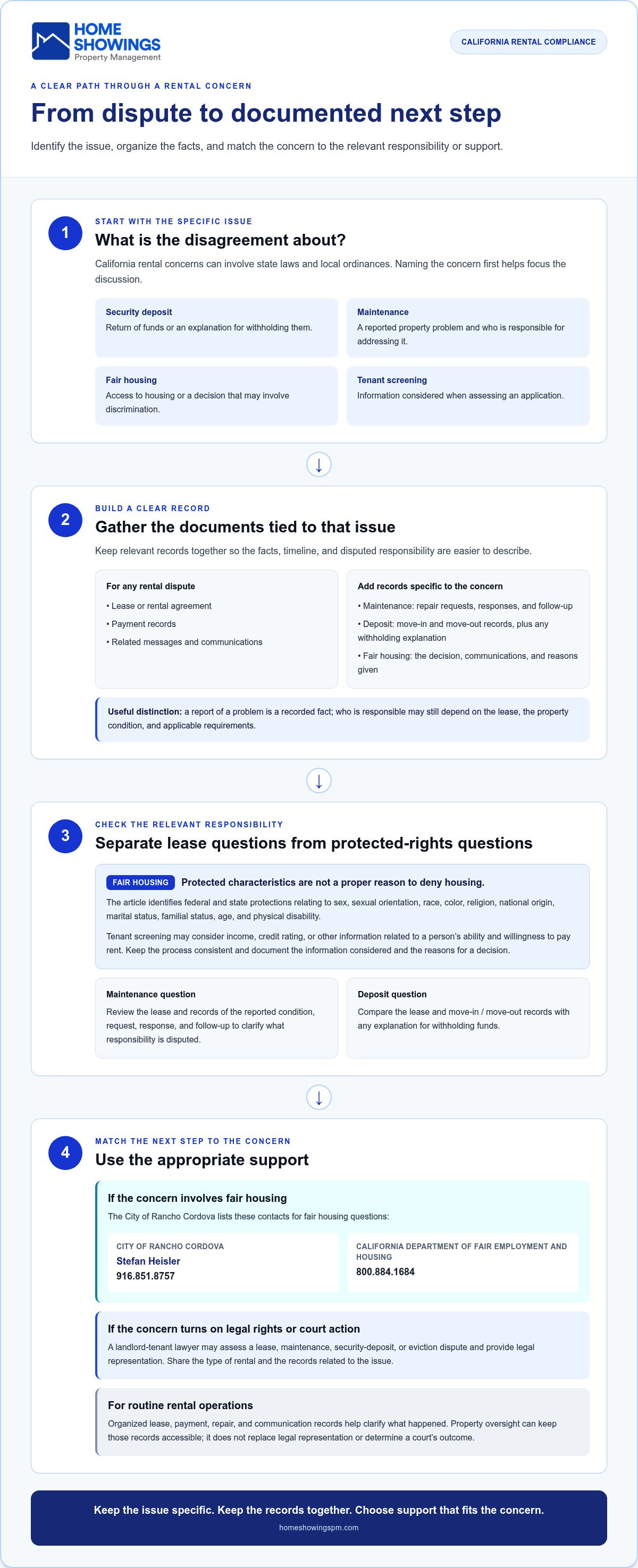
California rental disputes can involve state laws and local ordinances, so the specific issue matters. A disagreement about a security deposit differs from a dispute over maintenance responsibility. Identify the concern first, then gather the lease, payment records, repair requests, and related messages. This gives a landlord or tenant a clearer basis for discussing what happened and which responsibility is disputed.
Fair housing obligations also shape rental decisions in Rancho Cordova. The City of Rancho Cordova identifies the Fair Housing Act and Title VII of the Civil Rights Act of 1968 as bases for residents’ fair housing rights. Federal and state laws prohibit housing discrimination based on sex, sexual orientation, race, color, religion, national origin, marital status, familial status, age, or physical disability. A rental decision should not treat a protected characteristic as a reason to deny housing.
For questions about fair housing in Rancho Cordova, the City lists Stefan Heisler at 916.851.8757 as a contact. The California Department of Fair Employment and Housing can be reached at 800.884.1684. These contacts may be relevant when a concern involves fair housing access or possible discrimination. Keep records of the decision, communications, and reasons given, so the issue can be described clearly.
Tenant screening also calls for consistent, job-related decision-making. Housing providers may deny housing based on income, credit rating, or other information related to a person’s ability and willingness to pay rent. For example, an applicant’s credit information may be relevant to payment ability, while a protected characteristic is not a proper basis for a housing decision. A documented tenant-screening process can help keep the information considered and the reasons for decisions organized.
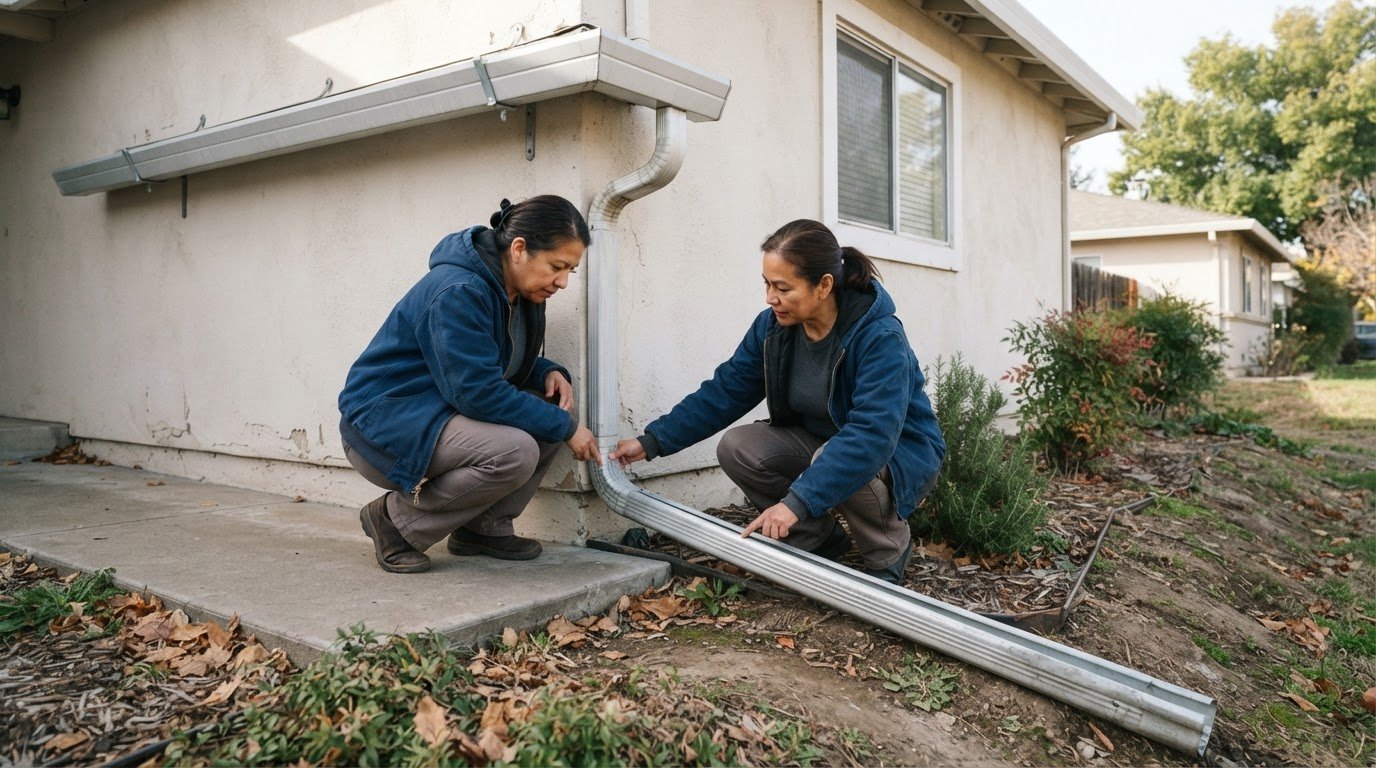
Maintenance disputes also require attention to the facts. A landlord-tenant lawyer may help determine who is liable for maintenance and investigate alleged landlord or tenant violations. If a resident reports a leak, preserve the request, response, and follow-up records. Those details help distinguish a reported problem from the question of responsibility, especially when both the lease and the property’s condition matter.
Security-deposit disputes can also benefit from careful documentation. A tenant may seek a landlord-tenant lawyer when a landlord refuses to return a security deposit. Organize the lease, move-in and move-out records, messages, and any explanation for withholding funds. The issue can then be assessed against the agreement and relevant legal requirements, rather than assumptions about either party’s intentions.
When a disagreement raises questions about legal rights, possible discrimination, deposit handling, or maintenance liability, separate facts from conclusions. Note what decision was made, when it occurred, who communicated it, and which records support the account. This record helps explain the dispute to a relevant fair housing contact or lawyer and keeps routine property concerns distinct from legal questions.
For related consumer questions, the California Department of Consumer Affairs can be reached at 800.952.5210, providing another point of contact when rental concerns require clarification.
Disputes between tenants
In a shared rental, conflict can begin with noise, guests, cleaning, or use of common areas. A disagreement between residents differs from a complaint about the landlord’s repairs. For example, a late-night noise complaint concerns interactions between tenants, while a leaking kitchen sink concerns the property. Identifying the issue helps the landlord respond to the right problem without treating every complaint as a lease violation.
Start by recording what each tenant reports, including dates, locations, and specific conduct. “The kitchen was left dirty” is less useful than noting which area was affected and when. If one resident reports repeated loud music, record the reported times and any related messages. Keep each person’s account distinct. This makes it easier to compare details without treating one tenant’s description as established fact.
A landlord can then review the rental agreement and written communication relevant to the complaint. Look for provisions about shared spaces, noise, guests, or other conduct. If the agreement doesn’t address the specific conflict, avoid presenting an assumption as a written rule. Instead, explain the concern clearly to each resident and ask for a practical account of what happened. Consistent communication helps preserve each person’s explanation.
Neutrality matters. If one tenant complains about another, hear both accounts before deciding how to respond. For example, a report about items blocking a shared hallway calls for clarifying which items are involved and where they’re kept. Avoid sharing one resident’s unrelated personal information with another. Keep messages focused on the reported conduct, the affected space, and relevant lease terms.
Some conflicts remain unresolved despite direct communication. Landlords may seek a landlord-tenant lawyer to help resolve a dispute between tenants. Attorneys may represent landlords, tenants, or both, depending on the matter and their representation. Legal guidance may be useful when allegations involve repeated lease concerns, disputed responsibility, or a conflict affecting the rental relationship. Keep the records together so the issue can be explained accurately.
For a manageable response, organize the complaint around four details: the reported conduct, when and where it occurred, who was involved, and what communication followed. Then compare those details with the lease and available records. A tenant’s concern deserves attention, but the response should address the documented issue rather than assumptions about motive. This gives both residents a clearer account of the landlord’s response and helps distinguish interpersonal conflict from a property or lease concern.
Negotiation and mediation
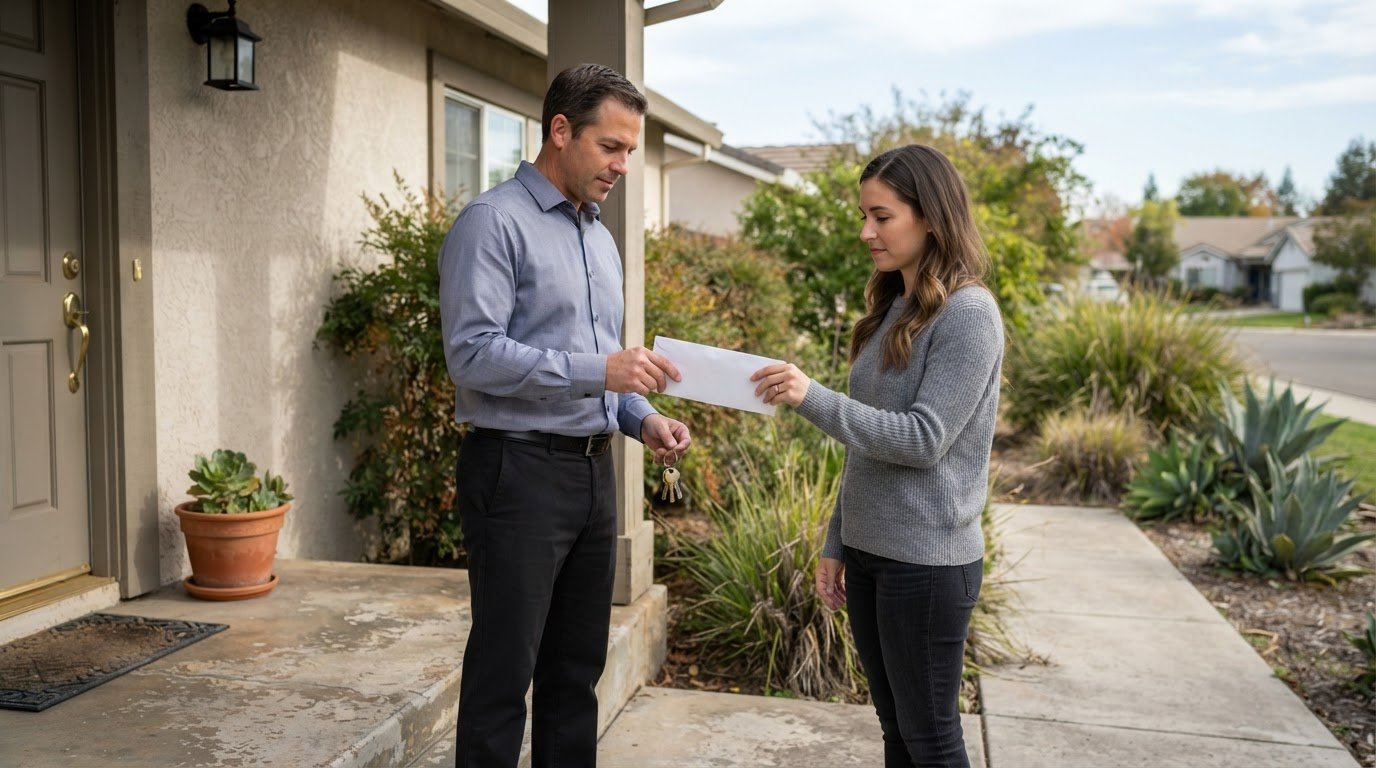
For a residential rental disagreement, negotiation gives the landlord and tenant a chance to discuss the specific problem directly. Start with one clearly defined issue, such as a disputed repair or unpaid rent. Each person can describe their understanding, point to relevant lease terms, and explain the outcome they’re seeking. Keeping the discussion focused makes it easier to identify where their accounts differ.
Before negotiating, organize the records related to the issue. For a repair concern, gather the tenant’s request, the landlord’s response, and any follow-up notes. For a rent dispute, compare the lease terms with payment records and messages. Then state the concern in neutral language, such as, “The payment record and your message show different amounts.” A specific statement invites a response without assuming why the disagreement occurred.
A productive conversation should end with clear next steps, not just an informal promise. Write down what each person agreed to do, who will handle it, and when they’ll revisit the issue. For example, if the dispute concerns a maintenance visit, record the agreed access arrangement and communication plan. Share the written summary with everyone involved. It provides a practical reference if the same question comes up again.
If direct discussion stalls, mediation can provide a structured setting for both sides to explain their positions. A mediator guides the conversation and helps explore possible resolutions while the parties discuss what they can accept. For example, a landlord and tenant disputing responsibility for a repair can identify the facts they agree on, then discuss the remaining disagreement. Mediation focuses on reaching a workable outcome through discussion.
Landlord-tenant lawyers may represent clients in negotiation and mediation. If legal questions shape the dispute, ask a prospective lawyer about alternative dispute resolution options, including mediation. Discuss the case timeline, possible outcomes, and billing before choosing legal representation. These conversations help clarify whether the lawyer can address the issue and what role they would play in discussions.
Negotiation or mediation is useful when both sides can explain their concerns and consider practical options. It may be less suitable as the only response when the dispute involves court proceedings, a serious allegation, or a party who refuses to participate. In those situations, keep the relevant lease, messages, and records organized, and seek legal guidance about available options. The right path depends on the facts and what each person needs resolved.
For handling tenant disputes in Rancho Cordova, treat each discussion as a chance to clarify one issue and document the outcome. A residential housing conflict can feel personal, but specific records and respectful language keep attention on the decision at hand. If a repair, payment, or lease concern remains unresolved, an organized record gives the next conversation a clearer starting point.
What risks should tenants and landlords consider before withholding rent or changing locks?
Withholding rent or changing locks can turn a repair or payment disagreement into a larger conflict. A tenant who stops paying after reporting a leak may face a landlord’s claim that rent remains unpaid. The landlord may view the same situation as an unresolved maintenance complaint. Keep the original repair request, replies, payment records, and lease together. These documents clarify what happened before either party took a step that changed the dispute.
For tenants, withholding rent can complicate the payment record and make a separate concern harder to resolve. A landlord may focus on the unpaid amount rather than the reported repair. Before changing payment behavior, identify the exact problem, review the lease, and get legal guidance about the options. A dated repair request and written description of the condition provide a clearer basis for discussing the issue.
For landlords, changing locks without a clear legal basis can prevent a tenant from entering the home or accessing personal belongings. That can escalate a disagreement into a dispute about access and eviction procedures. Don’t treat a rent disagreement or tense exchange as permission to restrict access. Review the lease and relevant records, and speak with a landlord-tenant lawyer before taking action that affects occupancy.
Tenants who change locks can also create practical and lease-related concerns. The landlord may need access for a documented maintenance issue, while other household members may rely on the existing keys. Before making a change, review the lease and communicate the reason in writing. Keep records of any access request, response, and key arrangement. This helps distinguish a security concern from an attempt to restrict someone else’s access.
For either side, avoid relying on assumptions about the other person’s intentions. Write down the event, date, people involved, and action taken. For example, record when rent was paid, when a repair was reported, or when a lock was changed. Preserve messages and receipts together. If the disagreement reaches court, a landlord-tenant lawyer may represent a party and address court proceedings.
Before withholding rent or changing locks, consider whether the step could create a new dispute, obscure the original concern, or affect access to the rental home. Ask a landlord-tenant lawyer about the case timeline, possible outcomes, and alternative dispute resolution, such as mediation. A lawyer can also explain how the facts and records relate to the legal issues. Deliberate communication and organized documentation keep attention on resolving the underlying problem.
Home Showings Property Management: Property Management
Home Showings Property Management supports rental owners with property management across key parts of the rental process. Rental marketing and tenant screening help owners organize leasing, while rent collection keeps payment handling within the management workflow. These services can be useful when recurring rental responsibilities make communication and records harder to keep orderly.
For an owner managing a rental in the Sacramento region, professional property management offers a practical next step for ongoing oversight. It doesn’t replace legal advice for court proceedings or complex rights disputes, but it can help organize day-to-day rental operations. To learn more about property management services, contact Home Showings Property Management or visit its website.
Build a More Steady Rental Experience
Make clear communication and organized rental processes part of your ongoing property plan. This groundwork can help owners identify concerns earlier, keep decisions consistent, and respond with better context when disagreements arise. Handling tenant disputes in Rancho Cordova is easier when day-to-day responsibilities don’t depend on scattered messages or memory.
Home Showings Property Management offers property management, rental marketing, and tenant screening for residential rental owners in the Elk Grove and Sacramento regions, including Rancho Cordova and nearby communities. These services support a structured leasing process, from presenting a rental to evaluating applicants and overseeing ongoing management. They aren’t a substitute for legal representation when a dispute requires court action, but they can help owners manage core rental operations with greater organization.
If you’re ready to discuss support for your rental property, contact Home Showings Property Management. A thoughtful plan can help you move forward with greater clarity and confidence.
Frequently Asked Questions
What California laws govern landlord-tenant disputes in Rancho Cordova?
California state laws and applicable local ordinances govern rental relationships in Rancho Cordova. The relevant rules depend on the issue, such as a lease term, deposit disagreement, maintenance responsibility, or eviction process. Fair housing concerns also matter: the City of Rancho Cordova identifies the Fair Housing Act and Title VII of the Civil Rights Act of 1968 as bases for residents’ fair housing rights. Keep the lease and dispute-related records organized.
Does Rancho Cordova offer local tenant-landlord mediation or dispute resolution services?
The City of Rancho Cordova lists Stefan Heisler at 916.851.8757 as a contact for fair housing questions, but that contact should not be mistaken for a mediation program. Landlord-tenant lawyers may represent clients during negotiation or mediation. For a disagreement about a repair, for example, the parties can identify the specific issue and discuss possible resolutions. Ask a lawyer about mediation options if legal representation is involved.
What rules apply to rent increases and just-cause eviction in Rancho Cordova?
Applicable California laws and local ordinances determine which rent-increase and eviction rules apply to a rental. The answer can depend on the lease, the property, and the circumstances behind the proposed change or termination. For example, review the written lease and any notice alongside the reason given. Don’t assume one rule applies to every rental. A landlord-tenant lawyer can assess how the relevant requirements apply to the specific dispute.

Comments