
Elk Grove Rental Property Seasonal Maintenance and Lease Timing

Lease timing works best when it accounts for seasonal upkeep and the rental demand expected when a home becomes available. Elk Grove rental property seasonal maintenance planning helps owners schedule repairs and prepare a home before marketing, while aligning lease expiration with a period that may bring more prospective renters.
A clear seasonal calendar is useful, but the right timing depends on the home’s condition, the work it needs, and the local rental market when a lease ends. A well-maintained property is easier to present to prospective tenants, while delayed repairs can disrupt turnover and listing plans.
This guide explains how to plan maintenance through the seasons and factor rental demand into lease expiration dates. You’ll learn how to coordinate routine upkeep, address seasonal needs before they delay turnover, and weigh lease flexibility against the goal of attracting a new tenant. The aim is a practical plan that protects the property and grounds leasing decisions in local conditions, not assumptions about a fixed peak month.
Table of Contents
What seasonal maintenance should Elk Grove, California rental properties receive each season?
What maintenance tasks should landlords complete before winter in Elk Grove?
How should rental properties in Elk Grove be prepared for hot, dry summers?
When should HVAC systems be serviced and filters replaced in Elk Grove rentals
How often should rental property gutters and drainage be inspected in Elk Grove
What seasonal maintenance should Elk Grove, California rental properties receive each season?
An Elk Grove rental property seasonal maintenance plan should reflect changing conditions around the home. In spring, check winter wear and prepare exterior systems. In summer, focus on cooling and dry landscaping. In fall, clear debris and prepare for rain. In winter, monitor leaks, drainage, and heating performance. A seasonal walkthrough turns these tasks into a repeatable property care routine.
Spring: Walk around the home after winter and look for loose roof materials, damaged screens, cracked caulking, and peeling exterior paint. Check that doors and windows close securely, and note indoor drafts or moisture marks. Clear leaves from yard drains and check downspouts for blockages. Test irrigation controls before regular watering begins, then check outdoor faucets for leaks. Record any repair needs and arrange the work before listing or completing a tenant turnover.
Summer: Check that the cooling system operates properly, and note unusual noise, weak airflow, or water near the equipment. Clean or replace filters according to the system’s instructions, and keep supply and return vents clear. Check irrigation coverage around trees, shrubs, and lawn areas. Adjust it to avoid dry patches and overspray onto siding. Look for gaps in exterior caulking and shaded areas that could allow pests to enter. Indoors, test ceiling fans and confirm blinds or window coverings work properly. These checks support tenant comfort and help identify maintenance needs early.
Fall: Clear leaves and other debris from gutters, downspouts, and ground-level drains. Confirm that downspouts direct water away from the foundation. Look for standing water, soil erosion, or cracks that may need attention. Check weatherstripping around exterior doors and windows, and seal visible gaps where appropriate. Inspect outdoor faucets and irrigation lines for leaks before colder weather arrives. Record your findings to track recurring drainage issues and plan repairs before the next rainy period.
Winter: Check ceilings, under-sink cabinets, and exterior walls for new water stains or dampness. Look for drips beneath sinks, and confirm toilets and faucets work properly. Test heating equipment and make sure unobstructed vents deliver airflow to each room. After storms, clear fallen branches from walkways and debris from drainage paths. For a vacant property, include plumbing, heating, and signs of water intrusion in scheduled inspections. Record each finding, its location, and any follow-up action.
Across all four seasons, follow the same inspection sequence: exterior, mechanical systems, plumbing, then interior finishes. Photograph visible damage and note whether it needs monitoring, repair, or specialist attention. A maintenance log can connect a recurring ceiling stain to a roof inspection or an irrigation leak to unusually dry planting beds. Before renewal or turnover, review open items and schedule work that could affect showings or tenant use.
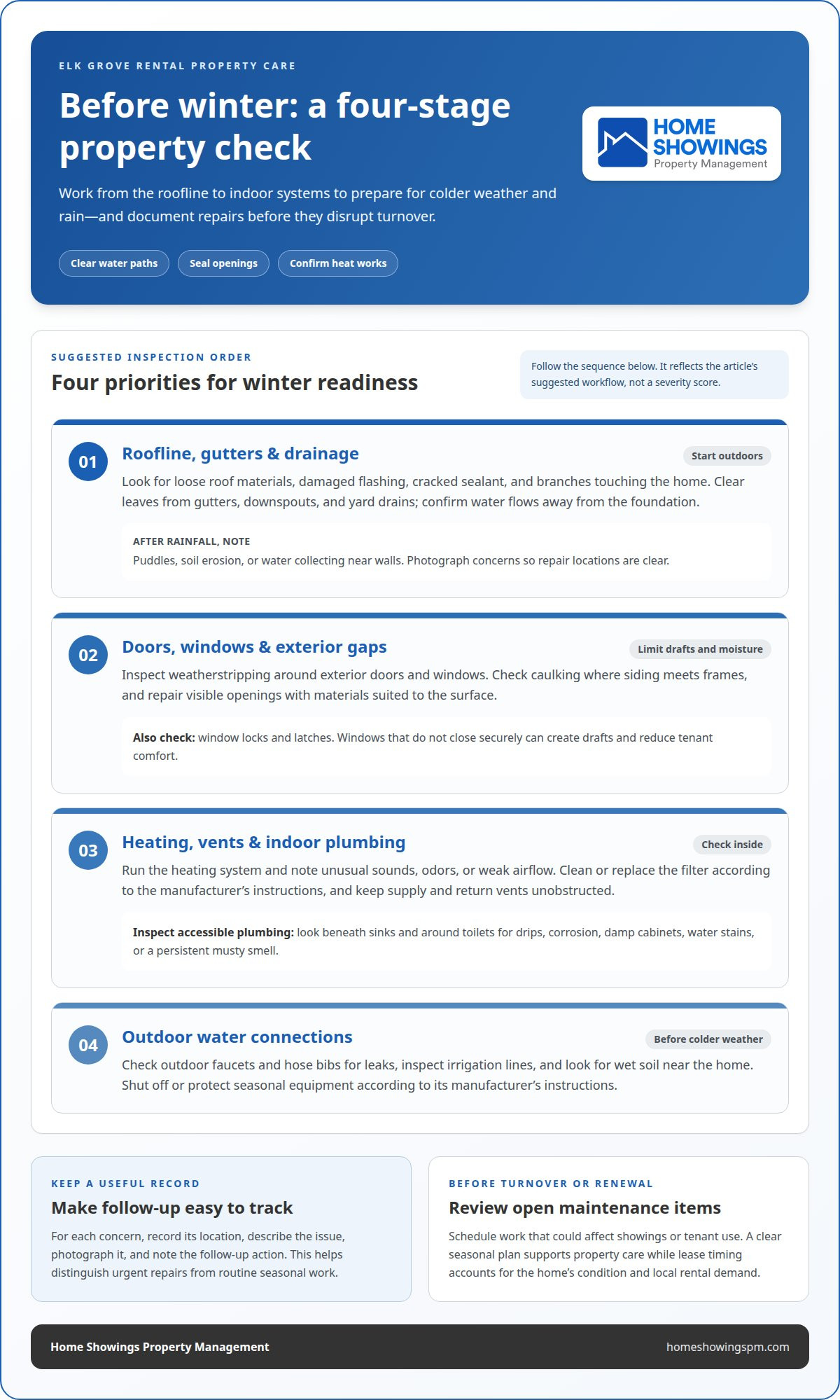
What maintenance tasks should landlords complete before winter in Elk Grove?
Before winter, check the rental from roofline to foundation and document each repair. In Elk Grove, prepare for colder weather and rain by clearing water paths, sealing openings, and confirming that heating equipment works. An Elk Grove rental property seasonal maintenance plan should record each location, describe the issue, and track follow-up. This helps distinguish urgent repairs from routine seasonal work.
Start outdoors. Look for loose roof materials, damaged flashing, cracked sealant, and branches touching the home. Clear leaves from gutters and downspouts, then confirm water flows away from the foundation. Check yard drains for leaves or soil that could block runoff. When possible, walk the property after rainfall and note puddles, erosion, or water collecting near walls. Photograph concerns to make repair locations clear.
Next, close gaps that could let drafts or moisture enter. Inspect weatherstripping around exterior doors and windows, and examine caulking where siding meets frames. Repair visible openings with materials suited to the surface. Check window locks and latches, too. Windows that don’t close securely can create drafts and reduce tenant comfort on colder evenings.
Clear debris from gutters, downspouts, and accessible drains.
Check roof edges, exterior sealant, and visible flashing for damage.
Inspect doors and windows for gaps, damaged seals, or faulty latches.
Look for water stains beneath sinks and around ceilings.
Test heating operation and keep vents clear of furniture or rugs.
Inside, run the heating system and note unusual sounds, odors, or weak airflow. Clean or replace its filter according to the manufacturer’s instructions. Make sure furniture, curtains, and stored items don’t block supply or return vents. Check accessible plumbing beneath sinks and around toilets for drips, corrosion, or damp cabinets. A small stain or persistent musty smell can signal moisture that needs attention.
Check outdoor water connections before cold weather. Look for leaking hose bibs, damaged irrigation lines, and wet soil near the home. Shut off or protect seasonal equipment according to its manufacturer’s instructions. Don’t assume every system uses the same winterizing method. Record the equipment type and steps completed so the next inspection reflects the property’s actual setup.
Inspect paths, steps, handrails, and exterior lighting. Remove loose branches and address uneven or slippery walking surfaces. Replace failed bulbs with compatible ones and confirm fixtures turn on. These checks can reveal hazards before wet weather makes them harder to spot. Keep walkways and entrances clear of stored tools, hoses, and yard debris.
Use Elk Grove rental property seasonal maintenance records to sort findings into repairs, monitoring items, and completed tasks. For example, a dripping faucet needs follow-up, while intact sealant can be recorded as checked. Add dates, photographs, and the responsible maintenance contact to the property file. This winter checklist supports consistent property maintenance planning without treating every home as if it had identical equipment or needs.
How should rental properties in Elk Grove be prepared for hot, dry summers?
Prepare an Elk Grove rental for summer by checking cooling, irrigation, shade, and exterior materials before the heat builds. Walk through the property, then group findings by system. For example, weak airflow is an HVAC concern, while dry soil near a foundation calls for a drainage review. Record each issue and its location to keep follow-up work focused.
Test the air conditioner using its normal controls. Confirm that it starts, runs, and delivers air through each accessible supply vent. Listen for new noises and look for water around indoor equipment. Check the filter and clean or replace it according to the system’s instructions. Keep return grilles clear of furniture, curtains, and stored boxes. If airflow remains weak, arrange a qualified assessment rather than guessing at the cause.
Inspect the irrigation system zone by zone. Run each zone and look for broken sprinkler heads, clogged nozzles, or water spraying onto windows and siding. Check drip lines around shrubs and trees for leaks or dry sections. Adjust coverage so water reaches planted areas rather than paved walkways. Review timer settings against the landscape’s needs, and note plants that remain stressed despite functioning irrigation.
Clear dry leaves and branches from near exterior walls.
Look for cracks or gaps around doors, windows, and utility openings.
Check that window coverings open and close without sticking.
Inspect fences, gates, and outdoor steps for loose or damaged parts.
Look for irrigation overspray that can leave surfaces persistently wet.
Indoors, check windows and doors for smooth operation and secure latches. Close each window and look for visible gaps around the frame. Make sure blinds or shades can reduce direct sun in rooms with strong afternoon light. If installed, check that ceiling fans run smoothly and keep their controls accessible. These checks can reveal comfort concerns before a tenant reports them during a hot spell.
Dry-season exterior upkeep matters, too. Remove accumulated leaves from corners, beneath stairs, and around utility areas. Keep stored items away from vents and equipment, and trim vegetation that blocks access to exterior components. Check mulch and exposed soil near the building for erosion or irrigation runoff. Photograph changes in cracked caulking or peeling paint to distinguish new deterioration from older wear.
For a vacant home, include cooling and irrigation in each scheduled property inspection. Run the air conditioning, check for unusual odors, and look for fresh water stains near equipment. Confirm that the irrigation timer works and no zone creates standing water. Record the date, observations, and needed repairs. A consistent summer checklist connects system performance, tenant reports, and exterior conditions without treating every Elk Grove property as identical.
Dry conditions make leaves and branches near walls, stairs, and utility areas a concern. Dry soil, erosion, runoff, or stressed plants can also point to irrigation or drainage problems. Check for leaks and adjust sprinklers so water reaches planted areas rather than pavement.
When should HVAC systems be serviced and filters replaced in Elk Grove rentals
Schedule HVAC attention around seasonal changeovers, not only after a tenant reports discomfort. In Elk Grove, have cooling equipment assessed before sustained summer heat and heating equipment checked before colder weather. The schedule depends on the equipment, its condition, and the manufacturer’s instructions. Keep the system model and prior service notes together so future maintenance reflects the unit’s needs, not a generic calendar.
A spring cooling check leaves time to address problems before regular air conditioner use. Confirm that the thermostat responds, the system starts, and each accessible supply vent delivers airflow. Note unusual vibration, persistent odors, or water near indoor equipment. If the unit struggles to cool or cycles unexpectedly, record what happens and arrange a professional assessment. A brief log helps distinguish a recurring concern from a one-time report.
Before cooler weather, test the heating function using its normal controls. Check that the thermostat changes the system setting and warm air reaches occupied rooms. Look for blocked vents, visible wiring damage, or unusual sounds around the equipment. Don’t open sealed components or attempt repairs without the right training. If the system doesn’t start or produces an unfamiliar smell, stop testing and arrange qualified service.
Filter replacement timing depends on the filter type, system instructions, household use, and indoor conditions. Check the filter during seasonal inspections, then follow the replacement guidance on the filter or equipment. A home with pets, renovation dust, or frequent use may need closer attention than a lightly used unit. Use the correct size and type; an ill-fitting filter can leave gaps or restrict airflow.
Write the filter size and type in the property maintenance record.
Note the date of each inspection and replacement.
Check for visible dust buildup, damage, or a poor fit.
Keep return grilles and supply vents clear of furniture and stored items.
During a tenancy, make filter instructions easy to find and specific to the installed system. For example, identify the return grille and explain how its cover opens if tenant filter changes are part of the arrangement. Record who handles replacement and how completed work is documented. Clear instructions reduce uncertainty, and a maintenance log keeps service history accessible at turnover.
After service, keep the technician’s findings, completed work, and recommended follow-up in the property file. Compare these notes at the next seasonal check. Repeated airflow problems, unusual equipment noise, or recurring water near the unit may need more attention than a filter change. Connecting each observation to the system’s service history helps guide next steps and grounds maintenance decisions in the equipment’s condition.
How often should rental property gutters and drainage be inspected in Elk Grove
Inspect gutters and drainage before the rainy season, then check them again after heavy storms. Include them in routine property walkthroughs, especially where trees drop leaves or roof valleys collect debris. The right frequency depends on the property’s surroundings and past trouble spots. A home beneath overhanging branches may need closer attention than one with clear rooflines and open drainage paths.
Start each inspection from the ground. Look for sagging gutter sections, separated joints, rust, or debris spilling over the edge. Check downspout outlets for blockages and confirm they direct water away from the building. From a safe vantage point, look for leaves or branches in roof valleys. Don’t climb onto a roof or use an unstable ladder to inspect hard-to-reach areas.
After a storm, look for fresh signs around the home. Water marks beneath the eaves, washed-out mulch, soil channels, or new puddles can show where runoff escaped its intended path. Check basement or ground-floor walls for damp patches, and look in accessible storage areas for moisture. Compare these observations with earlier notes to see if the same locations keep having trouble.
Inspect visible gutters and downspout outlets before seasonal rain.
Recheck drainage after storms that deposit branches or leaves.
Look for overflow marks, soil movement, and standing water.
Record recurring trouble spots beside the relevant building elevation.
Arrange a closer assessment for loose or hard-to-reach components.
Ground-level drainage deserves attention alongside gutters. Check that drain grates aren’t covered by leaves, lawn clippings, or soil. Look for settled ground that directs water toward the foundation rather than away from it. If a walkway or driveway channels runoff, note where water ends up during rain. Keep a clear record of blocked inlets, slow drainage, or water collecting near doors and walls.
Set inspection frequency according to what you find, not just the calendar. If one downspout repeatedly clogs, schedule follow-up checks around leaf fall and after storms. If a drain stays clear and the surrounding ground remains dry, routine seasonal reviews may be enough. Record the date, weather, location, photographs, and action taken. This makes changes easier to spot and focuses maintenance decisions on actual property conditions.
For multi-unit properties, identify shared gutters and drainage areas on a simple site plan. Note which downspouts serve each roof section, and record blocked outlets by location. During tenant turnover, include visible runoff paths and ground-level drains in the exterior walkthrough. If your Elk Grove property has recurring overflow or drainage concerns, request help with property upkeep and keep the inspection record ready for discussion.
Home Showings Property Management: Rental Marketing
Home Showings Property Management can coordinate seasonal upkeep with rental marketing as a home nears turnover. Its property management services include rental marketing, tenant screening, and property maintenance, helping owners align property readiness with the next leasing step.
Once you identify seasonal repairs, completing priority work before listing can help present the home clearly to prospective renters. Rental marketing and tenant screening support the leasing process, while property maintenance addresses ongoing upkeep. This approach is useful when an upcoming lease expiration means repairs and marketing need to be planned together.
For help coordinating rental marketing and property needs in Elk Grove, contact Home Showings Property Management.
Build your next leasing cycle around a clear plan
Use the maintenance record to decide what needs attention before the next lease transition. Set a realistic sequence: complete priority repairs, prepare the property for showings, and choose an expiration date with the expected turnover work in mind. Seasonal upkeep for an Elk Grove rental property is most useful when it guides both property care and the timing of the next leasing cycle.
Rental demand can shift throughout the year, so don’t assume one calendar date is right for every property. Consider the home’s condition, outstanding work, and when you want it ready to market. A coordinated plan makes these decisions easier to manage and keeps the next steps clear.
If you’re ready to plan your property’s next leasing cycle, contact Home Showings Property Management. A thoughtful schedule can help you move forward with greater clarity and confidence.
Frequently Asked Questions
What are common seasonal pest issues in Elk Grove rental homes and how can landlords prevent them?
The material does not identify specific seasonal pests, but it recommends checking exterior caulking and shaded areas for gaps or pest entry points and addressing visible openings.
What wildfire smoke, drought, and water-conservation risks affect Elk Grove rental property maintenance?
Hot, dry summers can leave landscaping with dry patches. Check irrigation coverage and leaks, adjust sprinklers to avoid overspray onto siding, and inspect dry soil near the foundation.


Comments