
Elk Grove Rental Property Move-In Checklist for Tenants

A thorough move-in record can prevent confusion later about whether a problem was already there. For an Elk Grove rental property, a tenant move-in checklist records the condition and contents of the home before occupancy. It gives tenants and property managers a shared reference for noting existing wear, damage, missing items, and repairs that need attention.
It’s understandable to want a clear record before furniture and boxes make a room harder to inspect. Dated photos or video can support written notes, and details such as the room, item, and issue make each entry easier to review. Return the completed checklist promptly and keep a copy to compare with the move-out record.
This guide explains what an Elk Grove rental property tenant move-in checklist covers, how an inspection can document condition, and how to handle the form, photos, and repair follow-up. It also shows how a move-in record clarifies existing issues and gives the tenancy an organized starting point.
Table of Contents
How professionals document condition on a rental move-in checklist
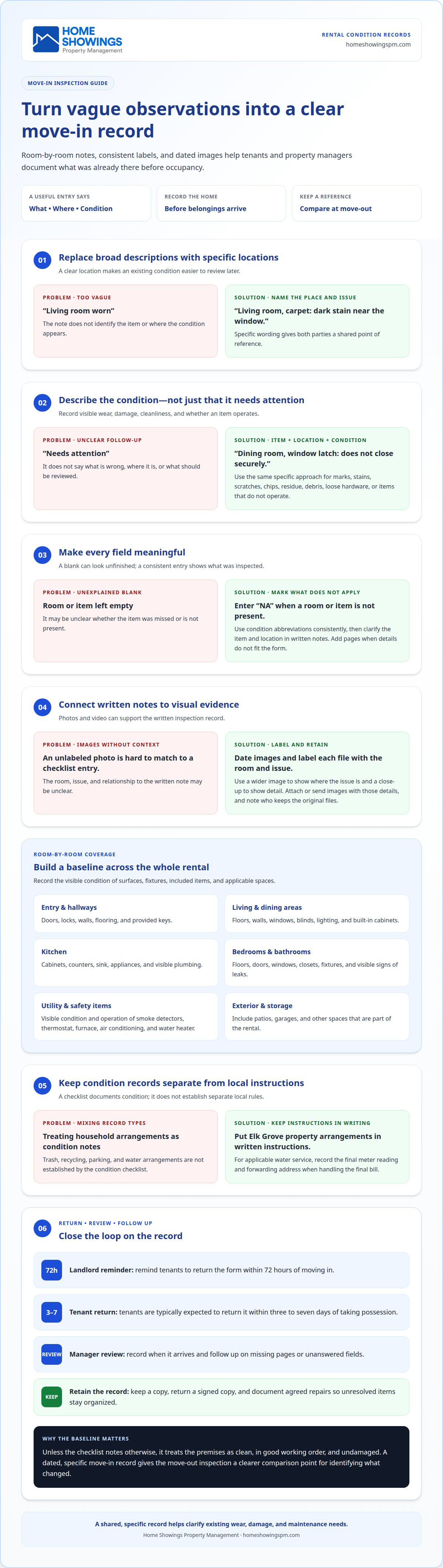
A consistent inspection records each room and item in sequence, then connects written observations to photographs. On an Elk Grove rental property tenant move-in checklist, describe what is present, where it is, and its condition before the tenant’s belongings arrive.
The baseline matters: unless the checklist notes otherwise, it treats the premises as clean, in good working order, and undamaged. A vague entry such as “living room worn” leaves room for interpretation. A location-based note, such as “living room, carpet: dark stain near the window,” identifies the specific condition for later review.
Living and dining areas: Record marks, stains, scratches, chips, or damage on walls, ceilings, floors, trim, doors, and windows, because each detail can be compared with the move-out record.
Fixtures and built-in items: Note the visible condition of lights, switches, outlets, blinds, and cabinets, because missing or damaged components should be distinguishable from ordinary wear.
Cleaning and repairs: Describe residue, debris, loose hardware, or an item that does not operate, because “needs attention” alone does not identify the issue.
Items that do not apply: Enter “NA” for a room or checklist item that isn’t present, because a blank field can look unfinished rather than intentionally inapplicable.
Use condition abbreviations consistently. Codes may identify cleaning, painting, repairs, replacement, or scratches, but written notes should clarify the item and location. For example, “dining room, window latch: does not close securely” gives a clearer record than “repair” alone. Add pages for details that don’t fit the form.
Photographs add visual context to written notes. Take dated images of problems, label each file with the room and issue, and attach them to the checklist or send them with those details. A wider image can show where the issue is; a close-up can show a chipped tabletop or wall mark. Note who retains the original files.
Put Elk Grove trash, recycling, parking, and water arrangements in the property’s written instructions; a condition checklist doesn’t establish separate local rules. For applicable water service, record the final meter reading and forwarding address when handling the final bill.
If a landlord disputes or refuses to acknowledge existing damage, a property manager can create a dated inspection record with specific notes and photographs. Keep observations factual, identify the location, and preserve the documentation separately from the landlord’s response.
What Is a Move-In Checklist?
For Elk Grove, California, the state list identifies 14 states requiring landlords to provide a move-in checklist, and California isn’t among them. The checklist still gives tenants and landlords a written baseline for the property’s condition and contents before occupancy.
A professional inspection uses the form room by room, noting the condition of fixtures, surfaces, and included items. Separate move-in and move-out fields make it easier to compare the same areas later.
Entry and hallways: Record the condition of doors, locks, walls, flooring, and any provided keys, because these details establish the starting condition.
Living and dining rooms: Note carpet or floor marks, wall damage, window condition, blinds, lighting, and built-in cabinets, because specific locations help distinguish existing issues from later changes.
Kitchen: Check cabinets, counters, sink, appliances, and visible plumbing for cleanliness, damage, and operation, because a stain or loose handle needs a clear location.
Bedrooms and bathrooms: Document floors, doors, windows, closets, fixtures, and visible signs of leaks, because those areas can change during everyday use.
Utility and safety items: Record visible condition and operation of smoke detectors, thermostats, furnace, air conditioning, and water heater, because these items affect comfort and function.
Exterior and storage areas: Include patios, garages, or other included spaces, because the checklist should reflect the rental property, not only its interior rooms.
The move-in inspection captures the property before the tenancy begins. The move-out inspection records its condition after the tenant leaves, using the first record for comparison. Normal wear and tear differs from newly identified damage, so dated notes and matching room descriptions help clarify what changed.
That comparison can inform a security deposit review. If new damage is identified after departure, the property manager may use security deposit funds to pay for repairs. The remaining security deposit is returned within 45 days after the final inspection and any deductions for repairs.
A professional property inspection can create a consistent room-by-room record and support a clearer comparison at move-out. Property inspection services are useful when owners need an organized condition record for a rental.
How a property manager handles checklist return, review, and repair tracking
After the move-in inspection, track the checklist from delivery through review and repair follow-up. A completed, dated form becomes the reference for existing conditions and unresolved items, rather than a loose collection of comments.
Timing matters. Landlords should remind tenants to return the form within 72 hours of moving in, while tenants are typically expected to return it within three to seven days of taking possession. The manager records when the form arrives and follows up on missing pages or unanswered fields.
Log receipt: Record the date the completed checklist arrives, so the file shows when the move-in condition record was submitted.
Review entries: Compare each note with the inspection record and flag unclear descriptions, such as “door problem,” for a specific door and issue.
Keep signed copies: Have the landlord initial each page and date and sign the final page; tenants should retain a copy for move-out reference.
Record repairs: For an agreed repair, have the landlord sign and date the entry and add an estimated completion date.
Track completion: Update the record when work is completed, or note that the issue remains open, so unresolved items don’t disappear from the file.
A clear repair entry separates the reported condition from the next action. For example, “bathroom sink drains slowly” identifies the concern; the repair record can then show whether it was accepted, scheduled, or completed. An estimated completion date gives both parties a shared reference without treating an unresolved item as finished.
Who handles move-in repairs and maintenance in an Elk Grove rental? The lease and the nature of the issue guide responsibility; a property manager can document the reported condition and coordinate maintenance for the owner. Tenants should report issues through the rental’s communication process so they can be recorded and assigned for follow-up.
If the tenant’s notes differ from the inspection record, preserve both accounts, clarify the room and item, and attach supporting documentation. Keeping the original entry intact avoids silently replacing one description with another. Give the tenant and landlord a copy of the reviewed form so they share the same record.
At move-out, the property manager conducts a final inspection and compares the property with the move-in record. That comparison helps identify changes needing attention before the next occupants move in, while distinguishing a previously documented issue from a newly observed one.
For a complete file, the manager keeps the checklist, review notes, repair entries, and completion updates together. This organized sequence makes the condition record easier to follow from move-in through maintenance and final inspection.
Property and tenant information a professional records
Start a useful inspection record by identifying the rental and the people connected to it. Include the tenant’s name and complete rental address so notes stay tied to the correct home if reviewed later. “Living room floor” is easier to locate when the form also identifies the property and tenancy.
Inspection details connect the written condition record to the right point in the tenancy. Provide separate move-in and move-out inspection fields so each inspection can be dated and reviewed independently. Leaving the move-out field blank at move-in is intentional: it leaves room for the later comparison rather than implying that the inspection has already happened.
A professional keeps identifying information distinct from condition observations. That separation helps the record stay readable when it contains several rooms, repairs, or supporting documents. Useful fields include:
Tenant name: Identify the tenant associated with the rental record, especially when a property has more than one occupant listed on the paperwork.
Rental address: Record the property’s address on the form and any attached pages, so a detached note does not lose its context.
Move-in inspection details: Enter the inspection date and connect the form to its photos or notes, keeping the original condition record together.
Move-out inspection details: Reserve the separate field for the later inspection, so the two records can be compared without mixing observations.
Related repair notes: Identify the affected room or item, then connect the entry to the relevant inspection record.
Clear identification matters when extra pages or images accompany the form. “Kitchen, cabinet door” gives a reviewer more context than a loose page labeled only “repair.” Match the address and inspection details across attached records to preserve the connection.
What utilities and services should new Elk Grove tenants set up before moving in? Arrange gas and electric accounts according to the rental’s utility instructions, and confirm how applicable water service is handled. Follow the property’s written instructions for trash, recycling, parking, and other services instead of relying on assumptions from another address.
Keep utility information beside, but separate from, the physical condition description. A checklist can identify the rental and inspection date, while separate move-in instructions explain service arrangements. Distinct records make it easier to find the right information when a tenant reports an issue or needs to identify which account serves the home.
Before filing the tenancy record, check that the tenant name, rental address, and move-in inspection details are present. If the form includes a move-out section, leave that field for the later inspection to preserve a clear comparison point. Consistent identification helps every note refer to the right property and stage of occupancy.
Purpose and benefits of a rental move-in checklist
A move-in checklist does more than list rooms. It creates a dated baseline for the property’s condition and contents, giving tenants and landlords a shared reference when questions arise. For example, a note about a pre-existing carpet stain helps distinguish that condition from damage observed at move-out.
Without a written record, an existing scratch or missing item may be difficult to place in time. A completed checklist and matching photographs give each observation context, such as “hallway, wall beside closet, paint chipped.” If a condition isn’t recorded, a tenant may later face a charge to correct a problem that existed before occupancy.
The checklist also organizes follow-up. A recorded issue can be reviewed, assigned for repair, and compared with later inspection notes. This distinguishes an existing condition from a repair request or a change identified after move-in.
Record the starting condition: Note a stained bedroom carpet or chipped kitchen counter, because specific entries clarify what was already present.
Identify missing or damaged items: Record a missing mailbox key or a loose cabinet handle, because contents and fixtures should have a clear starting record.
Separate observation from action: Note “bathroom faucet drips” as a condition, then track repair follow-up separately, because the report and response are different records.
Keep evidence with the form: Attach a dated image of a cracked window pane, because the photo supports the written location and description.
Preserve a move-out reference: Keep the completed form and compare matching rooms later, because the same location can be reviewed across both inspections.
For an owner, an accurate baseline supports property preservation by showing which maintenance concerns were visible at the start. A note about a loose stair rail, for instance, pinpoints the issue for follow-up instead of leaving it buried in a general comment.
For a tenant, a clear record makes it easier to report an issue without relying on memory. A dated entry about a bedroom window that sticks can show the concern was documented at move-in, while later notes can describe whether it changed.
The practical takeaway is simple: make each entry specific enough to answer what, where, and when. “Damaged floor” leaves gaps; “entryway, tile cracked beside front door” gives both parties a usable reference. A complete checklist can reduce avoidable misunderstandings, but it doesn’t replace clear communication about repairs or the tenancy agreement.
Home Showings Property Management: Rental Marketing
Home Showings Property Management helps Elk Grove rental owners connect a clear move-in process with the work of preparing and managing a rental. Rental Marketing supports tenant outreach, while Rental Property Management brings leasing and ongoing oversight together.
Turn to property management when tenant placement, rent collection, and inspection records become difficult to coordinate. A well-documented checklist gives the tenancy a clear starting point; consistent management helps keep related tasks organized.
For a conversation about rental marketing or property management, contact Home Showings Property Management.
Build a Steady Start for Your Rental
A move-in record can also start a more consistent rental ownership process. Consider how inspection records, tenant communication, and ongoing property decisions fit together, so each tenancy begins with clear expectations and an organized handoff. An Elk Grove rental property tenant move-in checklist provides a defined starting reference.
Home Showings Property Management offers Rental Property Management, Rental Marketing, and Tenant Screening for owners who want support with the wider rental process. These services support owners preparing a rental, placing tenants, and managing ongoing responsibilities. Contact Home Showings Property Management to discuss support for your property.
Contact Home Showings Property Management to discuss your rental needs and decide how to move forward with confidence.
Frequently Asked Questions
When should tenants complete the checklist?
Complete the checklist before moving furniture into the rental, ideally on move-in day. This preserves access to floors, walls, and fixtures before boxes or furnishings cover them. Follow the form’s return deadline; tenants are typically expected to return a completed checklist within three to seven days of taking possession. Keep a copy with move-in records so details remain available during the tenancy.
What should an Elk Grove rental property tenant move-in checklist include?
The checklist should identify the tenant and rental address, provide inspection fields, and allow room-by-room condition notes. Include surfaces, fixtures, appliances, keys, and any included storage or outdoor areas. For example, record whether the mailbox key is present and whether the thermostat responds when adjusted. Use “NA” for an item that doesn’t apply, and add pages when the form lacks space for precise observations.
What are California’s move-in inspection and security deposit documentation rules?
The state list described for move-in checklist requirements names 14 states, and California isn’t among them. A checklist can still preserve a useful record of the property’s starting condition. For deposit documentation, keep inspection notes and repair records together; the remaining security deposit is returned within 45 days after the final inspection and any deductions for repairs. The checklist helps document condition, but it doesn’t replace other tenancy records.
How does a professional document the condition of an Elk Grove rental before move-in?
A professional inspects each area and connects specific written observations with the property location. Instead of writing “damaged wall,” the record can identify “hallway, wall beside bedroom door, paint chipped.” This makes the observation easier to compare with a later inspection. The professional can also record whether an issue needs cleaning, painting, repair, or replacement, then keep supporting evidence with the inspection file.
What photos, videos, and written records can a property manager collect at move-in?
A property manager can keep dated photographs or video showing the rental’s condition, alongside the completed checklist and repair notes. A useful photo record identifies the room and issue, such as a close-up of a cracked tile paired with a wider image showing its location. Label files consistently and note who retains the originals. Written records can also show which repairs were agreed upon and their estimated completion dates.
How does a professional check safety devices and habitability items before move-in?
Record the visible condition and operation of listed items, including smoke detectors, thermostats, furnaces, air conditioning, and water heaters. For example, distinguish a thermostat that responds from one that appears unresponsive. Document any concern by location and item, then track it for follow-up. The checklist provides an inspection record; it should not be treated as a substitute for specialized testing.
How does a property manager handle the return of a signed move-in condition checklist?
A property manager records when the completed form arrives, reviews entries for clarity, and keeps it with related inspection records. Landlords should remind tenants to return the checklist within 72 hours, while tenants are typically expected to submit it within three to seven days of taking possession. The manager can confirm that pages are initialed and the final page is dated and signed, then retain the agreed repair notes with the file.


Comments