
Elk Grove landlord pest control: tenant eviction and pest duties

A tenant-caused infestation doesn’t automatically mean you can evict. In most U.S. states, landlords generally can’t evict a tenant solely for causing pests, though they may charge the tenant for treatment and issue a notice to comply or quit. This Elk Grove landlord guide to pest control explains when eviction may be considered and why prompt action and careful documentation matter.
It’s understandable to want a clear answer when pests threaten a rental property or create tension with a tenant. The key is to separate the immediate job of addressing the infestation from the question of who caused it and who may ultimately be responsible for the cost.
Learn what inspections and treatment plans can involve, how to set a pest-control schedule, and what to do when tenant conduct may have contributed. This guide also explains when professional pest control is a practical next step, so you can protect the property while handling tenancy issues carefully.
Table of Contents
1. Property inspections and customized treatment plans
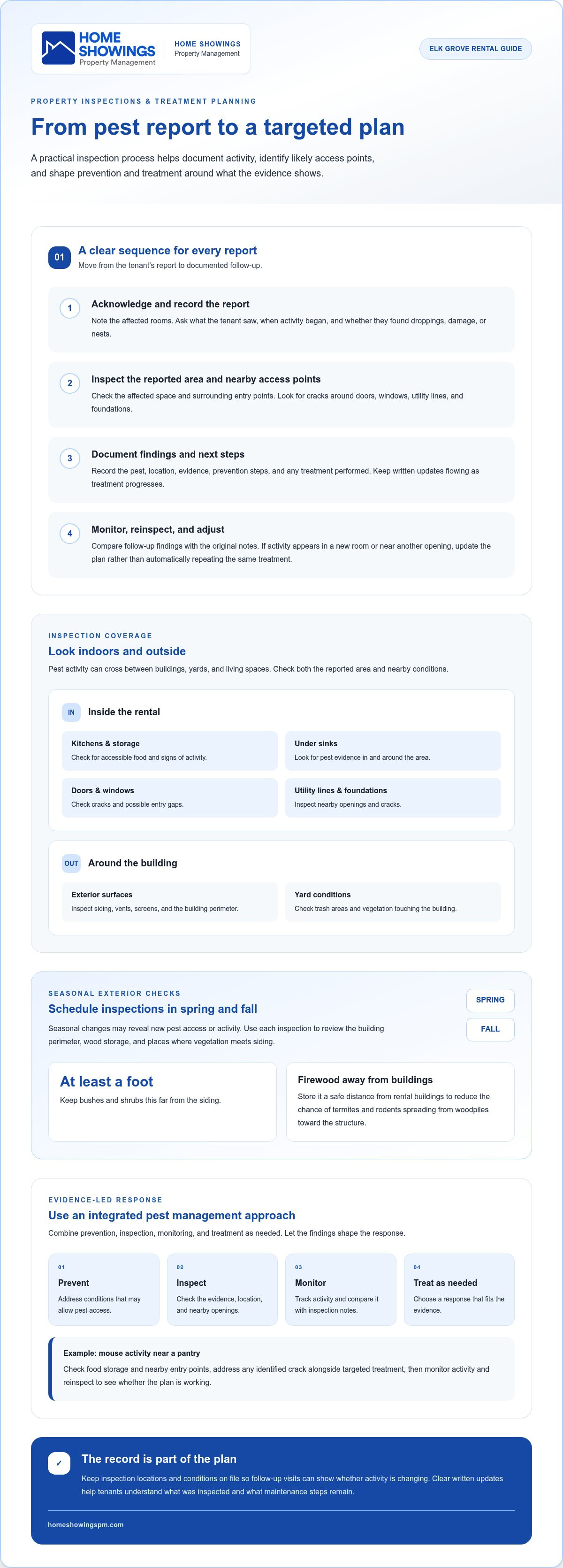
When tenants report pests, acknowledge the report, note the affected rooms, and arrange an inspection. Ask what they saw, when the activity began, and whether they found droppings, damage, or nests. Inspect the reported area and nearby entry points, then document your findings and next steps. Keep the tenant updated in writing as treatment progresses, even if responsibility is disputed.
Inspect both indoors and outside, since pest activity can cross between buildings, yards, and living spaces. Look for cracks around doors, windows, utility lines, and foundations. Check kitchens and storage areas for accessible food, and look under sinks for signs of activity. Outside, inspect siding, vents, screens, trash areas, and vegetation touching the building. Record locations and conditions so follow-up inspections can show whether activity is changing.
Schedule exterior inspections in spring and fall, when seasonal changes may reveal new pest access or activity. Include yard maintenance in an ongoing rodent-control plan. Keep bushes and shrubs at least a foot from the siding, and store firewood a safe distance from rental buildings. These steps can reduce pest access and limit places where termites and rodents may spread toward structures.
Build the treatment plan around the evidence rather than applying the same response everywhere. Integrated pest management combines prevention, inspection, monitoring, and treatment as needed. For example, a mouse sighting near a pantry calls for checking food storage and nearby entry points, then monitoring activity. If the inspection finds a crack, address it alongside any targeted treatment. Reinspect to see whether the plan is working.
Termite prevention also benefits from deliberate exterior checks and careful yard upkeep. During spring and fall inspections, examine the building perimeter, wood storage, and places where vegetation meets siding. Note visible changes and keep records to compare at the next visit. Storing firewood away from rental buildings can reduce the chance of termites and rodents spreading from woodpiles toward the structure.
Use inspection notes to guide follow-up: record the pest, location, evidence, prevention steps, and treatment performed. If monitoring shows activity in another room or around a different exterior opening, update the plan instead of automatically repeating the same treatment. Clear written updates also help tenants understand what was inspected and what maintenance steps remain. This structured process helps identify recurring access points and supports targeted responses.
2. Can you evict a tenant for causing a pest infestation?
In most U.S. states, a landlord generally can’t evict a tenant solely for causing a pest infestation. A landlord may be able to charge the tenant for pest control and issue a notice to comply or quit. Eviction generally requires court proceedings and proof that the tenant’s living conditions create a health hazard or extensive property damage. Before deciding how to proceed, document the infestation, its location, and any evidence connecting it to tenant conduct.
Responsibility matters, but an accusation alone doesn’t establish who caused the problem. Record the first report, inspect the affected rooms, and save photographs of pest evidence or damage. Note any conditions that may have contributed, such as exposed food, standing water, or an unsealed opening. Address the infestation promptly, even if responsibility is disputed, and resolve cost questions afterward. Keep written updates so tenants know what action is underway.
California pesticide notice requirements can depend on the treatment. Before work begins, give tenants written details about the planned treatment, affected areas, access needs, and safety instructions. Keep a copy with the inspection and treatment records. Written communication clarifies what is planned, when access is needed, and what steps follow treatment.
An unresolved pest problem doesn’t automatically establish a tenant’s right to withhold rent or break a lease. Treat the complaint as a maintenance issue: record the report, arrange an inspection, and document the response. Tenants considering a rent or lease remedy should assess the specific facts and applicable California requirements before acting. For landlords, dated records of reports, access arrangements, treatment, and follow-up help clarify what happened.
Older housing can develop gaps as materials wear or shift. Inspect door sweeps, window screens, vent covers, pipe openings, and cracks where utilities enter. Rodents may use a small gap behind a kitchen appliance or beneath a door, so check the route between the evidence and exterior access. Seal suitable openings with materials that fit the location, then recheck for movement or new activity.
Sealing entry points supports pest control, but it doesn’t replace treatment when pests are already indoors. Pair repairs with monitoring, sanitation, and follow-up inspections. If a tenant reports mice near stored food, for example, inspect nearby cabinets and wall openings, then record which gaps were closed. Don’t assume a re-service promise or warranty; follow the written treatment terms and documented follow-up plan.
3. Service frequency and between-visit treatments
There isn’t one inspection schedule that fits every Elk Grove rental. Set the frequency according to the pest, evidence of activity, property layout, and whether earlier treatment worked. A single ant trail may call for a different plan than recurring rodent activity across several spaces. Review notes after each visit, then adjust monitoring and follow-up based on the findings.
After learning about an infestation, arrange a professional pest-control visit within one to two days. Before the appointment, share the tenant’s report, affected rooms, and any photographs. Ask tenants to provide access to relevant spaces, including areas beneath sinks or behind appliances when needed. Clear access helps technicians inspect the source and target treatment rather than address only visible signs.
Residential rentals need a plan suited to living spaces and tenant access. Commercial buildings have different uses, layouts, and operating needs, so their service arrangements aren’t interchangeable with residential pest control. For a rental home, coordinate appointment timing with occupants and explain which rooms or exterior areas need access. Include preparation instructions when the treatment plan calls for them.
Between visits, reduce conditions that attract pests. Keep food in sealed containers, remove rubbish regularly, and use bins with tight-fitting lids. Fix leaks that leave water available, and note new droppings, gnaw marks, or insect activity for the next inspection. If bait or traps are used, keep them out of reach of children and pets. Follow pesticide product labels and application directions rather than adding extra product.
Rodent bait stations may be used when inspection findings support them. The number and placement depend on activity, access, and the property’s layout. Record each station’s location and check for new signs between scheduled visits. Don’t move stations or add treatments without following product directions and the treatment plan. A targeted approach helps distinguish continuing activity from old evidence.
Visit length depends on the affected areas, pest evidence, access, and work required. Before the appointment, arrange entry to relevant rooms, yards, storage areas, or shared spaces. A pest-treatment estimate can depend on the pest, property size, infestation extent, access, and treatment scope. Schedule around tenant availability and any preparation needed, not just the calendar.
Advance written notice helps tenants prepare for pesticide treatment. Explain the planned timing, affected areas, access needs, preparation steps, and applicable product-label safety instructions. Keep a copy of the notice and treatment record. These details give occupants a clear plan and help landlords coordinate follow-up if pest activity continues.
4. Common ants, mice, mosquitoes, cockroaches, and stinging insects
Different pests leave different clues, so match prevention to what the tenant reports. Ant trails often lead toward food or moisture; inspect the route and remove accessible food sources. For cockroaches, check kitchens, cupboards, and spaces around plumbing. Record sightings and locations, then compare them during follow-up. This approach helps identify whether activity is isolated or spreading through the rental.
House mice may forage in pantries, under sinks, and inside wall cavities. They weigh around half an ounce and can reach four inches long, excluding the tail. A house mouse usually nests within 30 feet of a reliable food source. Check nearby food storage and likely openings when a tenant reports activity. UC Statewide IPM Program recommends combining population reduction with sanitation and exclusion.
Elk Grove landlords addressing rat infestations can seal all holes larger than 1/4 inch to exclude rats and mice, according to UC Statewide IPM Program. They often burrow beside or beneath structures, near garbage bins or woodpiles. Roof rats weigh between five and ten ounces and are generally six to eight inches long. They may nest in attics, false ceilings, and trees.
Mosquitoes breed in stagnant water, including water in containers, birdbaths, and gutters. Inspect those areas after a tenant reports mosquito activity, and remove standing water where practical. Check gutters for water buildup and empty containers that collect rain. Include outdoor water sources in regular property inspections instead of focusing only on indoor sightings.
Stinging insects need attention to where tenants see them, such as near an entry, eave, or yard feature. Record the location and pattern of activity, then keep tenants informed about next steps. Don’t disturb a visible nest as a casual maintenance task. A targeted inspection can help distinguish occasional insects from repeated activity near a particular access point.
Shared spaces also affect pest pressure across rental buildings. Keep common areas clean, arrange rubbish-bin collections, and coordinate large-item pickups so discarded materials don’t remain accessible. Secure trash bins with sturdy lids to deter rodents and raccoons. Ask tenants to report overflowing bins or food waste promptly, and note recurring issues during property checks. These practical steps reduce pests’ access to food and shelter.
Use the evidence to choose the next step: remove accessible food, address water sources, close rodent entry points, or arrange targeted treatment. For example, droppings near a garbage area call for checking bin lids and the building perimeter. A tenant’s report of mosquitoes calls for checking stagnant water. Written records of locations and follow-up findings help show whether prevention is reducing activity or needs adjustment.
5. Hiring a professional pest control company
After learning about an infestation, arrange a professional pest-control visit within one to two days. A prompt inspection helps identify the pest, affected areas, and conditions supporting activity. Share the tenant’s report, photographs, and access details before the appointment. These specifics help technicians focus their inspection rather than rely on a general treatment plan.
Professional help is especially useful when rodents keep returning, pests appear in several rooms, or an outdoor nest causes repeated activity near entrances. A technician can inspect visible evidence and likely access points, then recommend targeted treatment and prevention. Ask for a written record of findings, treatment performed, and follow-up instructions. Keep it with tenant communications and property maintenance notes.
Don’t apply pesticides yourself unless you’re a certified commercial applicator. Choose professional pest control over experimenting with products, especially when the infestation’s source or extent is unclear. Treatment should address the pest and contributing conditions, not just the place where a tenant saw an insect. For example, repeated mouse sightings call for attention to entry points and available food, alongside population control.
Before applying any pesticide, read and follow the product label. Labels explain proper use, required protective equipment, and application amounts. Never apply more than the recommended amount, and keep bait and traps out of reach of children and pets. Products intended for outdoor use should never be used indoors. These precautions apply to perimeter sprays, repellents, and traps.
For outdoor pest problems, discuss the treatment area and preparation steps before work begins. Perimeter sprays, preventative repellents, and traps are possible treatment methods. The right approach depends on the pest and observed conditions. Share tenant concerns about access, pets, or children, and communicate the treatment plan and progress in writing. Seasonal inspections can also reveal changes in pest activity or new outdoor access points.
Plan the visit around access to affected rooms and outdoor areas. Clear the route to reported activity, such as beneath a sink or in a yard area near a nest. Ask the technician to explain any preparation or re-entry instructions that apply to the treatment. Record the visit date, findings, actions taken, and recommended monitoring. If activity continues, those details help guide focused follow-up instead of guesswork.
Professional treatment works best alongside ongoing property upkeep. Remove conditions that attract pests, repair access points, and track new tenant reports. A written plan combining treatment and prevention gives landlords a practical way to monitor results and respond to recurring activity. When an infestation affects tenant communication, maintenance coordination, and property records, organize those tasks as part of consistent rental management.
Home Showings Property Management: Property Management
Home Showings Property Management provides property management for rental owners who need help overseeing day-to-day responsibilities. If pest reports, tenant communication, and rental operations are taking time away from managing your property, professional management can help organize those tasks. The company also handles rental marketing, tenant screening, and rent collection, bringing leasing and payment tasks into the broader management process. Clear communication and consistent records help owners track reports and responses. Property management is a practical next step when you want support coordinating rental operations instead of handling every task yourself. Contact Home Showings Property Management to discuss management for your rental.
Make pest response part of your rental plan
Use this Elk Grove landlord guide to pest control as a starting point for a more consistent rental routine. The next step is to make pest reports, maintenance decisions, and tenant communication part of one organized process. Clear records can help you spot recurring issues and keep property decisions grounded in what has actually happened, rather than scattered messages or memory.
If managing a rental takes attention away from other priorities, Home Showings Property Management offers Property Management, Rental Marketing, and Tenant Screening. These services support owners at different stages of the rental process, from preparing a property for prospective tenants to managing ongoing responsibilities. Choose the support that fits your needs and how you want to oversee your property.
Contact Home Showings Property Management to discuss support for your rental. A steady, well-documented approach can help you move forward with greater clarity.
Frequently Asked Questions
Can you evict a tenant for causing a pest infestation?
Generally, a tenant can’t be evicted solely for causing an infestation. A landlord may issue a notice to comply or quit and seek to recover treatment costs if evidence supports tenant responsibility. Whether an infestation can support eviction depends on the circumstances and the evidence of tenant responsibility. Keep reports, inspection notes, and relevant communications together. A tenant’s housekeeping alone doesn’t establish that they caused the pests; document specific conditions and evidence.
How much time does a landlord have to take care of a pest infestation?
Arrange a professional pest-control visit within one to two days after learning about an infestation. This is practical guidance for booking an assessment, not a stated legal deadline for completing treatment. Next steps depend on the pest, its spread, access to affected rooms, and treatment required. For example, activity in a shared wall or several units may need coordination before treatment can effectively address the source.
How often will pest control service be done, and why?
Service frequency depends on the pest, evidence of activity, property conditions, and how well earlier treatment worked. Use inspection findings to decide whether monitoring, follow-up treatment, or prevention needs adjustment. A recurring mouse sighting near food storage, for example, calls for reviewing both the affected space and conditions that may attract rodents. Spring and fall are useful times for exterior inspections, but they don’t determine every treatment schedule.
Is pest control a landlord’s or tenant’s responsibility?
In general, landlords are responsible for pest control unless they can prove the tenant caused the infestation. The facts matter: an existing building gap differs from evidence that a tenant left food waste accessible. Tenants can help by reporting sightings, storing food securely, and allowing access for inspection or treatment. Document the suspected cause separately from the immediate response, so resolving the infestation doesn’t wait on a cost dispute.
What are Elk Grove landlords' legal responsibilities for pest control in California?
For an Elk Grove rental, landlords should respond to pest reports, investigate the source, and address an infestation unless evidence shows tenant responsibility. Keep dated records of the complaint, access arrangements, findings, and treatment steps. If tenant actions may have contributed, document specific evidence rather than rely on assumptions. Use this Elk Grove landlord guide to pest control alongside careful, property-specific records when deciding how to handle responsibility.
Who is responsible for pest control in California rentals: landlord or tenant?
Usually, the landlord handles pest control unless they can prove the tenant caused the infestation. Responsibility for the bill and the need to address an active pest problem are separate issues: deal with the problem promptly, then document and resolve any cost dispute. For example, record whether pests entered through a building opening or whether tenant conduct created conditions that attracted them. Clear evidence helps support a fair allocation of responsibility.
What California laws require rental housing to be free of pests?
Don’t assume every pest sighting automatically establishes a legal violation or identifies who must pay. For an Elk Grove property, assess whether there is an infestation, what conditions are present, and whether tenant conduct contributed. Keep records of the report and actions taken. A single insect sighting differs from recurring pest activity affecting living spaces; the extent and cause help guide a landlord’s response and decisions about responsibility.
How quickly must an Elk Grove landlord respond to a pest infestation?
Respond promptly by acknowledging the report, arranging access, and setting up an inspection. A professional visit within one to two days after learning of an infestation is practical guidance for starting the process. Treatment timing depends on the pest, affected areas, and inspection findings. Send the tenant a written update with the planned next step, especially if access or preparation is needed before treatment.


Comments