
Elk Grove Landlord Guide to Local Rental Laws and Repairs

Repair duties are only part of a landlord’s responsibilities in Elk Grove. Landlords must maintain rentals in a clean, safe, habitable condition, and California law requires them to return any remaining security deposit within 21 calendar days after the tenancy ends, after lawful deductions. This Elk Grove landlord guide to local rental laws also explains the written contact information tenants must receive for management and ownership.
It’s easy to focus on fixing a leak or preparing a deposit statement and overlook how tenants can report problems or send notices. Clear responsibilities and reliable records make these moments easier to manage.
This Elk Grove landlord guide to local rental laws explains how repair duties, fair housing protections, security deposit rules, and management contact disclosures affect residential rentals. It also shows how to keep these responsibilities distinct and make sure tenants know what to do.
Table of Contents
Fair housing protections
Fair housing protections shape how landlords advertise, screen applicants, and manage leases in Elk Grove, California. Under the federal Fair Housing Act, 42 U.S.C. § 3604, housing providers may not discriminate based on race, color, religion, sex, familial status, disability, or national origin. These protections apply throughout the rental process, from an initial inquiry to decisions about tenancy and conduct. Apply the same standards to every applicant and tenant.
Use consistent screening criteria for every application. If income, rental references, or credit history factor into a decision, apply the same standards and record the outcome. The Fair Credit Reporting Act protects tenants’ personal and credit information. Keep consumer report details secure, limit access to people involved in screening, and don’t let protected characteristics affect rental decisions. Deposit deductions are a separate matter and must not conceal discriminatory treatment.
Disability-related requests need individual attention. Fair housing protections require reasonable accommodations for tenants with disabilities. An accommodation changes a policy or practice to help someone use and enjoy their home. For example, a tenant might request an exception to a building rule because of a disability. Consider the request in light of its circumstances, respond respectfully, and retain relevant communications. Avoid assumptions about a tenant’s needs or abilities.
A four-hour Crime Free Housing Seminar requirement described for another jurisdiction should not be treated as an Elk Grove, California, rule. Similarly, screening regulations adopted elsewhere do not automatically apply to local rentals. Before treating a seminar, screening rule, or registration requirement as a legal obligation, identify the jurisdiction it governs. Similar place names can cause confusion, but they do not make one city’s rules apply in another.
Are Elk Grove rental properties subject to local business licenses, inspections, or registration requirements? Apply the rules for Elk Grove, California, rather than assuming a license or inspection requirement applies because a similarly named municipality has one. The obligation depends on the city and state rules that apply to the property.
A consistent screening process makes these responsibilities easier to manage. Record the criteria used, protect credit information, and document how accommodation requests are handled. These records help explain how each application or request was considered and support fair treatment if a decision is questioned later. Avoid informal practices that vary from one household to another.
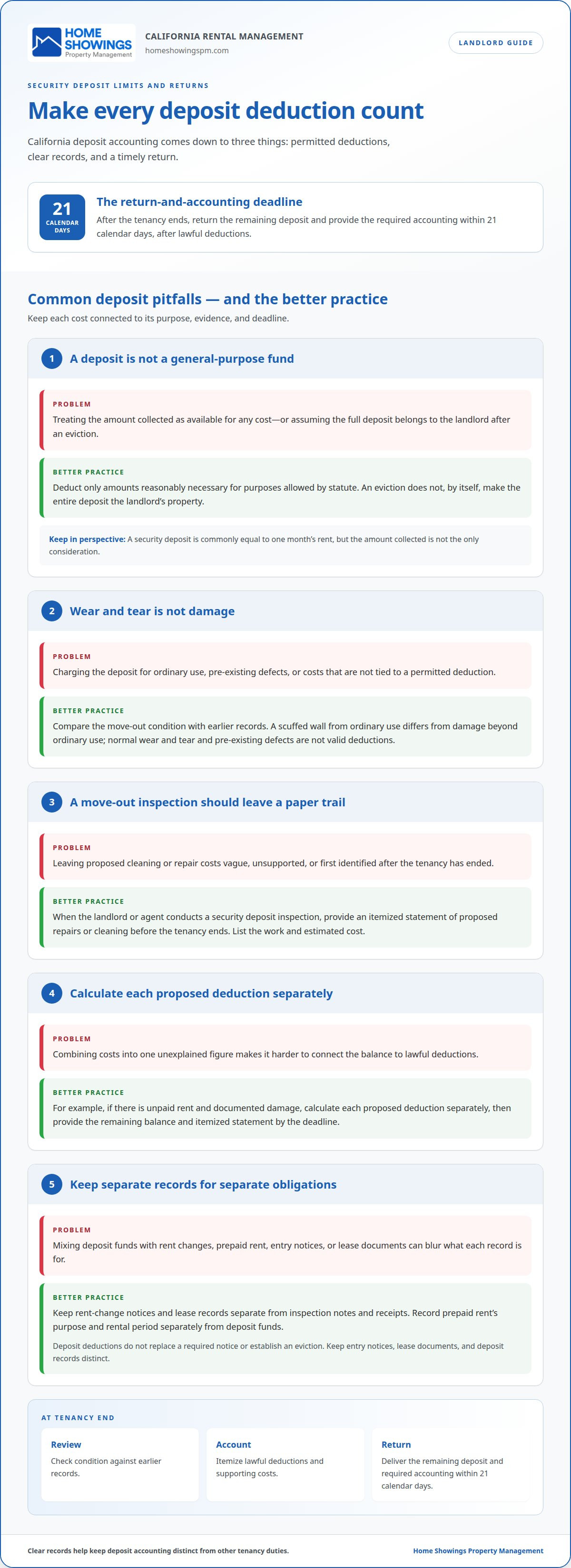
Security deposit limits and returns
California deposit accounting centers on permitted deductions, clear records, and timely return. A rental security deposit is commonly equal to one month’s rent, but the amount collected is not the only consideration. California law limits deductions to amounts reasonably necessary for purposes allowed by statute. Connect each deduction to a permitted cost and keep supporting records.
After a tenancy ends, return the remaining deposit and provide the required accounting within twenty-one calendar days. The deadline applies after lawful deductions, not after a later re-rental or final dispute. For example, if a tenant leaves unpaid rent and documented damage, calculate each proposed deduction separately, then deliver the balance and itemized statement by the deadline. An eviction does not, by itself, make the entire deposit the landlord’s property.
A move-out inspection can help identify potential cleaning or repair costs before they become disputed deductions. When a landlord or agent conducts a security deposit inspection, California law requires an itemized statement of proposed repairs or cleaning before the tenancy ends. Compare the unit’s condition with earlier records, then list the work and estimated cost. Normal wear and tear and pre-existing defects are not valid deposit deductions. A scuffed wall from ordinary use differs from damage beyond ordinary use.
Rent changes and deposit accounting are separate matters. An increase changes the rent amount; it does not, by itself, provide a valid reason to deduct from a deposit. If rent changes during a tenancy, keep the written notice and lease records separate from inspection notes and receipts. This Elk Grove landlord guide to local rental laws treats these records as distinct parts of managing a tenancy.
Prepaid rent also needs its own record. Note the payment’s purpose and the rental period it covers rather than combining it with the deposit ledger. For example, record a payment for a future rental period separately from funds held for permitted deductions. This clarifies how each amount should be applied when the tenancy ends.
What rules apply to landlord entry, lease terms, and ending a tenancy in California? The lease and applicable notice requirements govern entry and termination. Deposit deductions do not replace a required notice or establish an eviction. Keep entry notices, lease documents, and deposit records separate. As this Elk Grove landlord guide to local rental laws explains, careful records help keep each responsibility clear.
Organized condition records support accurate inspections and deposit statements. Property inspection records can help document a unit’s condition during its management.
What are the landlord’s responsibilities regarding repairs?
Elk Grove landlords must keep rental properties clean, safe, and habitable, with working utilities, common areas, and trash receptacles. Ignoring a reported defect can leave hazards unresolved and lead to disputes about repairs, damages, or lease obligations.
Repair and safety requirements depend on the rental’s condition and whether essential features remain usable. The risks associated with a violation vary with the conduct and the issue involved.
Rental Property Safety and Habitability
Habitability means keeping a rental clean, safe, and suitable for tenants to live in. This duty goes beyond appearance to include working utilities, shared spaces, and trash receptacles. A broken light at a shared entrance, for example, is different from a cosmetic mark. Identifying problems promptly helps owners prioritize safety and protect the property.
Maintenance and Repairs
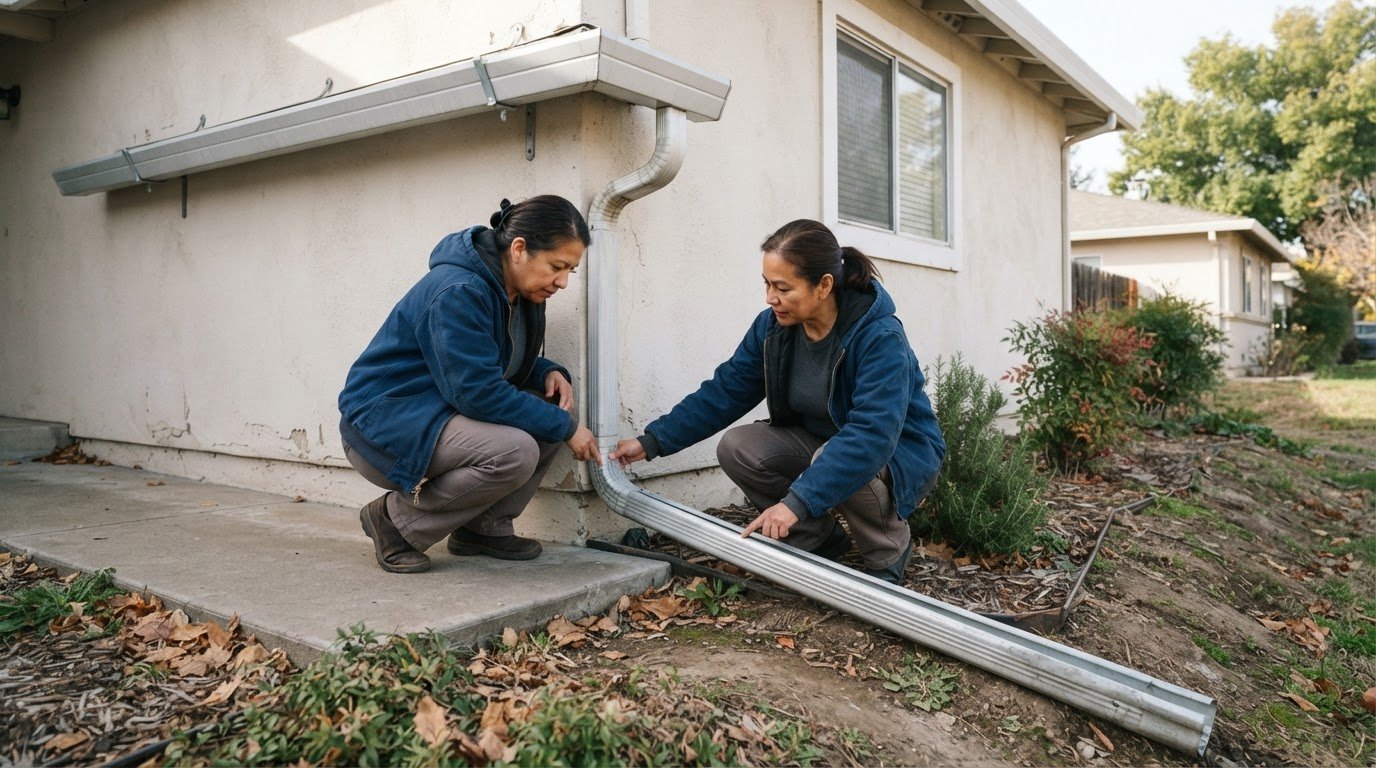
Maintenance and repairs keep rental features and shared areas functioning. A leaking pipe, failed heater, or blocked common walkway calls for a different response than ordinary wear. Record the tenant’s report, assess the affected area, and arrange the work needed to address the defect. Clear records also show which repairs were completed and when.
Start with the reported condition, not an assumption about its cause. If a tenant reports water around a sink, document the location and inspect for a leak or related damage. The cause matters: landlords aren’t responsible for repairs caused by a tenant, guest, or household member. Record what you observe before deciding who is responsible for repair costs.
Not every repair has the same urgency. A failed utility can affect daily use, while a loose cabinet handle may not pose an immediate safety concern. Triage each situation by the defect, its effect on the home, and whether the problem is spreading. This helps owners prioritize conditions that threaten safety or continued use.
Keep a practical repair record for each report. Include the tenant’s description, the date received, observations at the property, work arranged, and the completed repair. For example, a record of a recurring leak can show whether the first repair fixed the source or further work was needed. Accurate notes help distinguish unfinished maintenance from a new issue.
The risks extend beyond the immediate repair bill. An unresolved safety problem can worsen property damage, disrupt a tenant’s use of the home, and prompt disagreement about the landlord’s response. Consistent inspection and repair records clarify what the tenant reported, what the owner addressed, and how the property’s condition changed over time.
Routine oversight can help owners spot developing issues before tenants report them. A documented inspection may flag a malfunctioning fixture or damaged common area, while follow-up records show whether the repair was completed. For an Elk Grove rental, this steady process connects habitability obligations with practical property preservation.
Disclosing landlord and management contact information
Written contact details give tenants a clear route for rent payments, repair reports, and formal notices. Written contact details can help tenants identify whom to contact about rent, management, repairs, notices, or complaints. If one person collects payment while another handles repairs, identify both roles in writing. Keep the contact record with the rental agreement so tenants can find the right person without guessing.
Make the disclosure useful in practice. State where a tenant should send a written notice, how to report a repair, and who handles routine questions. For example, if the owner receives formal notices while a manager coordinates maintenance, distinguish those responsibilities. Unless one contact handles every duty, a single undifferentiated name may leave tenants unsure where to direct an urgent report or payment question.
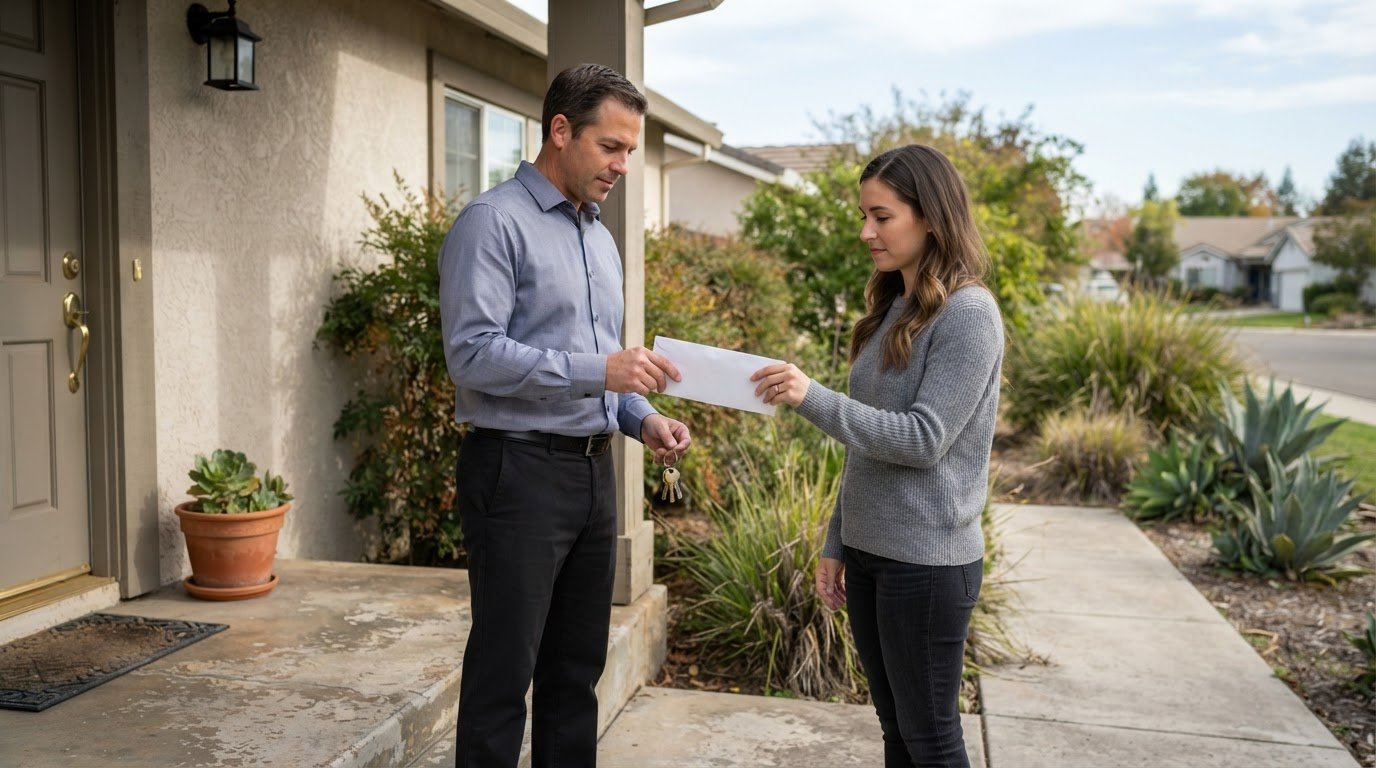
Changes in ownership or management call for an updated record. When a rental property is sold, the selling landlord must notify the tenant about new management or ownership. Provide updated contact details and explain where future rent payments and notices should go. Keep a copy of the notification and its delivery record with the lease documents. This clarifies who took responsibility and when.
Lead-based paint disclosures are addressed by federal regulations at 24 Code of Federal Regulations Sections 35.88 and 35.92. For mold or bedbug concerns, keep records of reported conditions, communications, and the response taken. A dated tenant report followed by a written update, for example, helps show how the issue was handled. Keep those records with property documents, separate from routine rent and credit records.
Contact procedures should also follow fair housing protections. Give tenants the same ways to submit notices and requests, regardless of race, religion, national origin, or another protected characteristic. For instance, don’t direct one tenant to an informal phone conversation while requiring another to submit a written complaint. Consistent channels make communications easier to receive and track fairly.
A practical contact record can identify the owner or authorized representative, property manager, and people handling rent, repairs, notices, and complaints. Keep the current version with the signed agreement and update it when responsibilities change. If a tenant reports a maintenance issue in writing, preserve the report and response together. This clarifies what was received, who acted, and how the issue was addressed.
Clear disclosures support organized residential management. Keep payment instructions separate from repair and notice contacts, and retain written updates after a sale or management change. Tenants should be able to identify the right contact for each issue and know where to deliver important information.
Does Elk Grove have local rent control or just-cause eviction rules?
Rent control and just-cause protections address different decisions. Rent control limits increases under rules that apply to covered housing, while just-cause rules restrict the reasons a landlord can end a tenancy. For an Elk Grove rental, distinguish the City of Elk Grove in California from Elk Grove Village in Illinois. A rule reported for one municipality does not establish a rule for the other.
The available facts in this guide do not establish whether Elk Grove, California, has a local rent-control ordinance or just-cause requirement. That is not proof that no local rule applies. Determine whether a current city ordinance covers the property and proposed action, alongside applicable California law. A rent increase and a tenancy termination are separate actions, so assess each under the rules that govern it.
Before changing rent, identify the rental’s city jurisdiction, lease terms, and type of tenancy. Compare the proposed change with applicable state and local requirements, including notice provisions. For example, a fixed-term lease and a periodic tenancy can raise different timing questions. Keep the written agreement and any rent-change notice together so the reason, amount, and effective date are clear.
Ending a tenancy requires a separate review. Identify whether it is fixed-term or periodic, the reason for termination, and the applicable notice. A just-cause rule, where applicable, concerns the permitted reason for ending a tenancy; it does not replace notice or court procedures. Keep records of the stated reason and communications delivered to the tenant. Eviction is a legal process, not simply a lease change or request to leave.
Local rules can vary by property and circumstance. A city ordinance may define which rentals it covers, while state law can impose separate requirements. For example, a rule covering one type of housing does not automatically apply to every residential lease. Identify the jurisdiction, then match the ordinance’s scope to the property and proposed action. This avoids relying on a neighboring city’s policy or a rule intended for another state.
For each rent or termination decision, keep the lease, notices, delivery records, and supporting communications together. These documents help explain what action was taken and when. Written records also help keep rent decisions separate from maintenance issues, deposit accounting, and tenant complaints.
Organize rental decisions and records through a consistent management process. Plan your rental management needs around the property’s leases and ongoing responsibilities.
Home Showings Property Management: Rental Marketing
Home Showings Property Management connects rental marketing with the day-to-day work of managing a residential property. If you’re preparing a home for its next tenant, Rental Marketing helps present it to prospective renters. Tenant Screening supports a consistent application process, while Rent Collection helps organize payments after a lease begins.
For owners balancing leasing with ongoing responsibilities, Property Management brings these tasks together. Consider support when marketing, coordinating applicants, and administering rent take attention away from other priorities. Contact Home Showings Property Management to discuss your rental marketing and management needs.
Build a steadier rental management routine
Clear processes make rental ownership easier to manage over time. Treat each new lease, tenant communication, and property decision as an opportunity to keep records organized and responsibilities clear. This steady approach turns the guidance in this Elk Grove landlord guide to local rental laws into practical habits for your next tenancy.
When leasing or day-to-day coordination takes more attention than you can give, Home Showings Property Management can help with Property Management, Rental Marketing, and Tenant Screening. These services support the rental process, from presenting a home and evaluating applicants to managing ongoing responsibilities.
Take the next step at a pace that works for you. Contact Home Showings Property Management to discuss support for your rental property and move forward with a clearer plan.
Frequently Asked Questions
Who to Contact With Compliance Questions?
Start with the property manager or owner contact listed in the rental paperwork. They can clarify who handles rent, repairs, notices, and property records. For a question about a city requirement, identify the property’s exact jurisdiction first: Elk Grove, California, and Elk Grove Village, Illinois, are different municipalities. For legal interpretation of a specific lease or dispute, consult a California landlord-tenant attorney.
What California landlord-tenant laws apply to rental properties in Elk Grove?
Elk Grove rentals are subject to applicable California landlord-tenant rules and federal protections. Relevant topics include fair housing, reasonable disability accommodations, consumer credit reporting, habitability, security deposits, and required disclosures. Federal lead-based paint disclosure regulations are cited at 24 Code of Federal Regulations Sections 35.88 and 35.92. Local requirements depend on the property’s jurisdiction, so distinguish rules for Elk Grove, California, from those for Elk Grove Village, Illinois.
What are California's rent increase limits and notice requirements for Elk Grove landlords?
There isn’t one rent-increase limit that automatically applies to every Elk Grove rental. The rules depend on the property’s coverage, lease terms, tenancy type, and proposed change. Review those factors before setting an increase, then keep the current lease, rent history, and written notice together. Don’t assume that a rule for a particular housing program or tenancy applies to every residential property.
What are the rules for security deposit amounts, deductions, and return deadlines in California?
California limits deposit deductions to amounts reasonably necessary for purposes permitted by law. A landlord must return any remaining deposit within twenty-one calendar days after the tenancy ends, following lawful deductions. Keep an itemized accounting and supporting records for each deduction. Normal wear and tear and pre-existing defects are not deductible. If a deposit inspection is conducted, California law requires an itemized statement of proposed repairs or cleaning before the tenancy ends.
What notices and legal steps are required to evict a tenant in Elk Grove?
Eviction requires following the process that applies to the tenancy and the reason for ending it. Identify the lease terms and relevant facts, preserve communications, and follow the required notice and legal process. Do not treat a notice as a completed eviction or rely on self-help measures. Because requirements depend on the circumstances, have a California landlord-tenant attorney review a proposed termination before acting.
What are the rules for rental applications, screening fees, and tenant background checks in California?
Screening can include interviews, identification, credit, references, income, and criminal background checks. Apply the same written criteria to applicants and keep records showing how decisions were made. The Fair Credit Reporting Act protects personal and credit information used in screening. Keep any application screening charge separate from rent and the security deposit, disclose it before collecting it, and retain a record of the payment and screening activity.

Comments